
There’s something almost magical about poaching a whole chicken until it’s so tender the meat falls off the bone with the gentlest fork nudge. Hainanese Chicken is that dish: a simple Singaporean and Malaysian classic that proves you don’t need complicated techniques or a long ingredient list to create something truly memorable.
This recipe delivers silky, delicate chicken paired with fragrant ginger rice and a punchy chili-lime sauce that ties everything together beautifully. What makes it special is how the poaching liquid infuses the chicken with subtle flavor while keeping the meat impossibly moist, and the resulting broth becomes the secret weapon for cooking the rice.
If you’ve had this at a restaurant and thought it seemed intimidating, I’m here to tell you it’s one of the most straightforward dishes you can make at home. You’ll have restaurant-quality results in under an hour, and honestly, your version will taste better because you control every element.
Why You’ll Love This Recipe
This dish checks every box for weeknight dinners and special occasions alike. The chicken emerges impossibly tender, the rice soaks up incredible flavor from the poaching broth, and the whole meal comes together in about 45 minutes from start to finish.
- Tender, juicy poached chicken that never dries out
- Fragrant ginger and scallion rice infused with chicken broth
- A bright, punchy chili-lime dipping sauce that transforms every bite
- Minimal active cooking time with maximum flavor payoff
- Naturally gluten-free and adaptable to most dietary needs
My Experience Making This Recipe
I first made Hainanese Chicken after a disappointing restaurant version left me convinced I could do better. I was right, and that first homemade batch converted me into a believer of this seemingly simple dish.
What struck me most was how the gentle poaching method created chicken that was genuinely silkier than any roasted or pan-seared version I’d made before. The meat had this almost custard-like quality that made every bite feel luxurious rather than just functional protein.
My family demolished it so quickly I’ve made it at least a dozen times since then, and it’s become my go-to dinner when I want something that feels restaurant-fancy but requires zero stress in the kitchen. The beauty is in the simplicity, and that’s what keeps me coming back.
Recipe Overview
- Recipe Name: Hainanese Chicken
- Servings: 4 people
- Prep Time: 15 minutes
- Cook Time: 35 minutes
- Total Time: 50 minutes
- Course: Main Course
- Cuisine: Singaporean/Malaysian
- Calories per Serving: 520 calories
Equipment You Will Need
- Large stockpot with lid (at least 6-quart capacity)
- Meat thermometer
- Sharp knife for cutting chicken and ginger
- Cutting board
- Medium saucepan with lid
- Fine mesh strainer
- Small serving bowl for sauce
- Serving platter
Ingredients for Hainanese Chicken
For the Chicken and Broth
- One whole chicken, 3 to 3.5 pounds, at room temperature
- 2-inch piece of ginger, sliced into 4 or 5 thick rounds (no need to peel)
- 4 scallions, cut into 2-inch pieces
- 1 tablespoon salt, plus more to taste
- 8 cups water or chicken stock
- 1 teaspoon sesame oil
For the Ginger Rice
- 2 tablespoons vegetable oil
- 2 tablespoons minced ginger
- 2 cloves garlic, minced
- 1 cup jasmine rice, rinsed well
- 1.5 cups reserved poaching broth (from the chicken)
- 1 teaspoon salt
- 2 scallions, chopped (for garnish)
For the Chili-Lime Sauce
- 3 red chilies (or 2 if you prefer less heat), chopped
- 3 cloves garlic, minced
- 1 tablespoon ginger, minced
- 3 tablespoons fresh lime juice
- 2 tablespoons soy sauce
- 1 tablespoon chicken broth
- 1 teaspoon sesame oil
- 1 teaspoon sugar
Ingredient Notes and Substitutions
- Whole Chicken: A whole bird poaches more evenly and stays moister than individual parts, and you get bonus broth for the rice. If you prefer, use 4 boneless chicken breasts, though reduce the poaching time to 15 to 20 minutes.
- Jasmine Rice: Its subtle fragrant quality complements the delicate chicken perfectly. White basmati rice works as a substitute and cooks in roughly the same time, though the flavor profile shifts slightly.
- Fresh Ginger: Young ginger has a milder, sweeter bite than mature ginger, but either works here. Avoid powdered ginger, as it tastes flat and won’t deliver the fresh punch this dish needs.
- Red Chilies: Thai bird chilies deliver heat that matches this dish’s character, but jalapeños provide milder warmth. Use dried red pepper flakes if fresh chilies aren’t available, starting with a half teaspoon and adjusting to taste.
- Lime Juice: Freshly squeezed lime juice is non-negotiable for brightness and acidity. Bottled lime juice lacks the vibrancy this sauce requires.
How to Make Hainanese Chicken
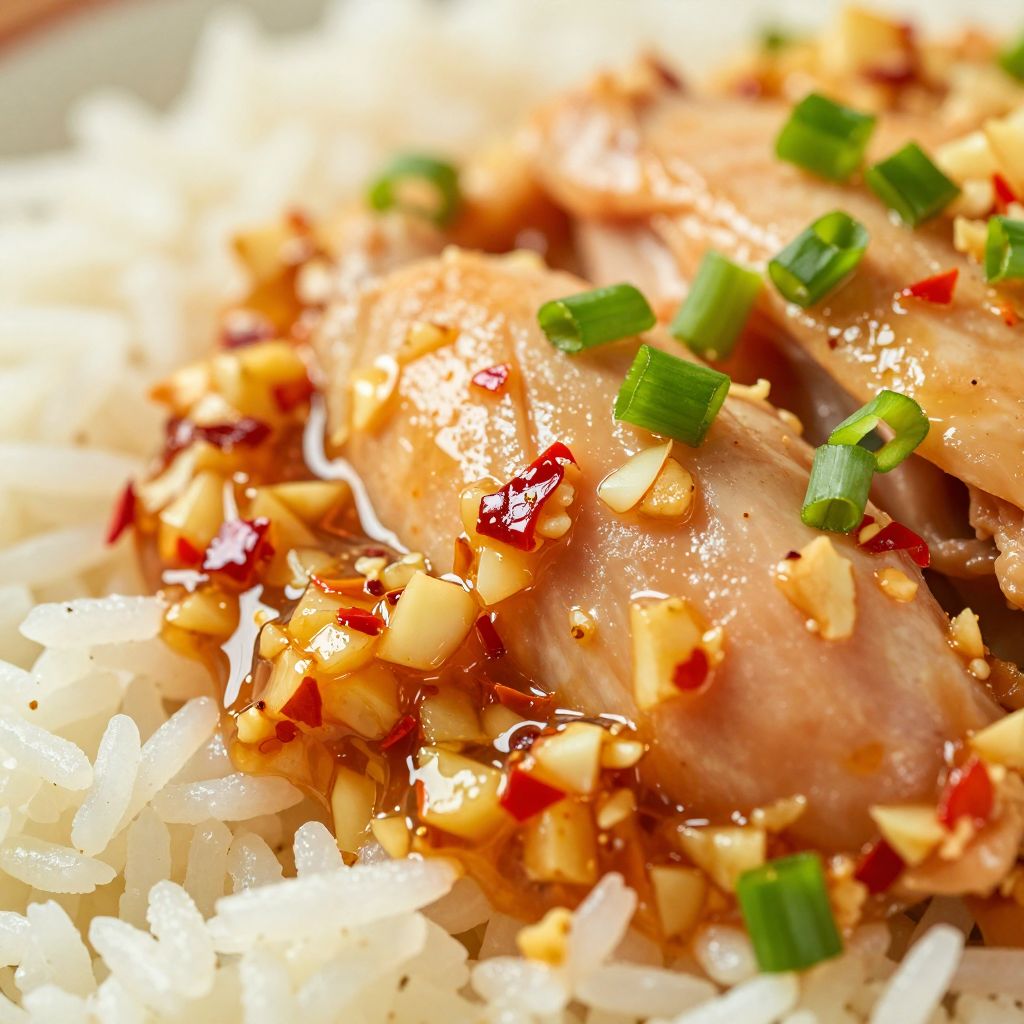
Step 1: Prepare the Chicken
Remove the chicken from the refrigerator and let it sit at room temperature for 15 to 20 minutes before cooking. Bringing the chicken to room temperature ensures even cooking throughout the bird, preventing dry breast meat while waiting for the thighs to cook through.
Pat the chicken dry inside and out with paper towels, and tuck the wing tips underneath the body. This step isn’t just for appearance; it helps the chicken cook more evenly and prevents the delicate wing tips from overcooking or splitting.
Step 2: Bring the Poaching Liquid to a Boil
Pour the 8 cups of water or chicken stock into your large stockpot and bring it to a rolling boil over high heat. Using stock instead of water gives you even more flavor in the resulting broth, which becomes the foundation of your rice.
Step 3: Add Aromatics to the Broth
Once the liquid reaches a boil, add the sliced ginger, scallion pieces, and the 1 tablespoon of salt to the pot and stir. These aromatics infuse the broth with flavor while the chicken cooks, creating a deeply satisfying poaching medium.
Step 4: Submerge and Poach the Chicken
Carefully lower the whole chicken into the boiling broth, breast side down. The chicken should be mostly submerged; if it’s not, add a bit more water or stock until it is.
Once the broth returns to a boil (this takes a few minutes), reduce the heat to low, cover the pot with a lid, and maintain a gentle simmer for 25 to 30 minutes. The key to tender, juicy chicken is keeping the heat low; a rolling boil toughens the meat, while a gentle simmer keeps it silky and delicate.
Step 5: Check the Chicken for Doneness
After 25 minutes, insert a meat thermometer into the thickest part of the thigh without touching bone; it should read 165 degrees Fahrenheit. If it hasn’t reached 165 degrees yet, cover the pot again and simmer for another 3 to 5 minutes, then check again.
Don’t skip this step if you want perfectly cooked chicken every time; overcooked chicken is dry, and undercooked chicken poses food safety risks.
Step 6: Rest and Cool the Chicken
Once the chicken reaches 165 degrees, remove it from the broth and place it on a cutting board or platter. Let it rest for 10 minutes before cutting; this allows the juices to redistribute throughout the meat, keeping each bite moist.
While the chicken rests, strain the poaching broth through a fine mesh strainer and reserve 1.5 cups for the rice and 1 tablespoon for the sauce. Save any leftover broth for soups or other uses.
Step 7: Make the Ginger Rice
Heat the 2 tablespoons of vegetable oil in a medium saucepan over medium heat. Once the oil shimmers, add the minced ginger and garlic, stirring constantly for 30 to 45 seconds until fragrant but not browned.
Add the rinsed jasmine rice to the pan and stir continuously for 1 to 2 minutes, toasting the grains lightly. Toasting the rice develops a subtle nuttiness and helps each grain stay separate and fluffy rather than mushy.
Pour in the 1.5 cups of reserved poaching broth and add the 1 teaspoon of salt. Stir once, bring to a simmer, then cover with a lid and reduce heat to the lowest setting.
Cook for 15 to 18 minutes without lifting the lid or stirring; the broth cooks the rice while infusing it with ginger and chicken flavor. When the time is up, the liquid should be completely absorbed and the rice tender.
Step 8: Prepare the Chili-Lime Sauce
While the rice cooks, combine the chopped red chilies, minced garlic, and minced ginger in a small serving bowl. Stir in the lime juice, soy sauce, 1 tablespoon chicken broth, sesame oil, and sugar.
Let the sauce sit for at least 5 minutes so the flavors meld together. Taste and adjust the seasoning; add more lime juice for brightness, more soy sauce for saltiness, or more sugar if the sauce feels too sharp.
Step 9: Cut and Plate the Chicken
Once the chicken has rested, cut it into quarters or into individual portions. You can serve it as large pieces or slice the meat off the bone into bite-sized pieces, depending on your preference and your guests’ expectations.
Arrange the chicken on a serving platter and drizzle it with the reserved sesame oil mixed with a pinch of salt for extra flavor and a glossy finish.
Step 10: Finish the Rice and Serve
Once the rice is cooked through, fluff it gently with a fork and stir in the chopped scallions. Divide the rice among serving bowls or arrange it on the platter alongside the chicken.
Serve the chili-lime sauce on the side so each diner can add as much as they like. The contrast between the delicate chicken, fragrant rice, and punchy sauce is what makes this dish sing.
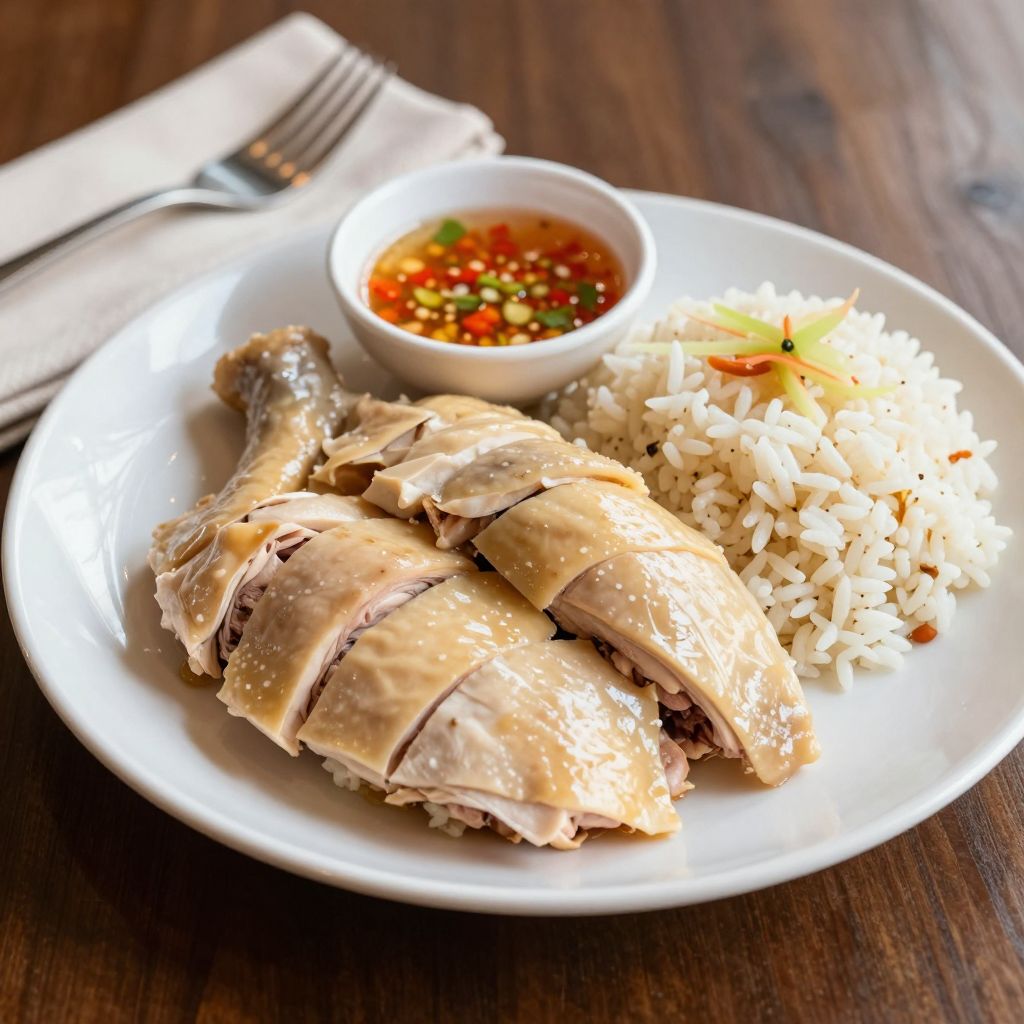
Pro Tip: The key to silky chicken is keeping the poaching liquid at a gentle simmer, never a rolling boil; boiling toughens the meat and makes it dry.
Tips for the Best Hainanese Chicken
- Bring the chicken to room temperature before poaching; this ensures even cooking from outside to center without the exterior drying out while the interior finishes cooking.
- Don’t skip straining the poaching broth; bits of impurities and coagulated proteins cloud the broth and affect both the rice flavor and visual appeal.
- Toast the rice in oil and aromatics before adding the broth; this step adds depth and prevents the grains from clumping together.
- Make the chili-lime sauce at least 5 minutes ahead so the flavors have time to marry and develop complexity.
- Serve the chicken while it’s still warm but not piping hot; this showcases the tender, silky texture better than either cold or steaming-hot chicken.
- If your broth tastes bland, add a splash of soy sauce or fish sauce to boost umami depth without overwhelming the delicate chicken flavor.
Common Mistakes to Avoid
- Boiling the broth instead of simmering: A rolling boil toughens the chicken and creates a cloudy, murky broth rather than a clear, clean liquid.
- Skipping the room temperature step: Cold chicken takes much longer to cook evenly and often ends up with overcooked breast meat before the thighs finish.
- Not resting the chicken after cooking: Cutting into the chicken immediately causes all the juices to spill out onto the cutting board instead of staying in the meat.
- Using old or stale ginger: Mature, dried-out ginger tastes harsh and bitter rather than fresh and bright; choose ginger that feels firm and has thin, papery skin.
- Overcooking the rice: If you stir the rice or peek under the lid too often, you release steam and disrupt the cooking process, leading to mushy rice.
Serving Suggestions
Hainanese Chicken works beautifully as a standalone main course, but it also pairs wonderfully with simple vegetables and other Asian side dishes. The clean, delicate flavors let any accompaniment shine without overwhelming it.
- Steamed bok choy or gai lan drizzled with sesame oil and sprinkled with salt
- Cucumber slices tossed with a rice vinegar and sesame oil dressing
- Steamed broccoli with a squeeze of fresh lime juice
- A simple tomato and onion salad dressed with fish sauce and lime
- Extra steamed jasmine rice on the side if you want more carbs
Variations to Try
- Spicy Hainanese Chicken: Add a tablespoon of sriracha or chili paste to the poaching broth to infuse the chicken with gentle heat throughout, then adjust the chili-lime sauce to match.
- Herbed Ginger Rice: Stir fresh cilantro and Thai basil into the rice after cooking for extra aromatic complexity that complements the chicken beautifully.
- Coconut Milk Poaching Broth: Replace half the water or stock with coconut milk for a richer, slightly sweeter broth that creates incredibly creamy, luxurious chicken.
- Soy-Ginger Dipping Sauce Alternative: Mix soy sauce, rice vinegar, minced ginger, and sesame oil for a milder, less spicy sauce that lets the chicken’s delicate flavor take center stage.
- Cold Hainanese Chicken Salad: Chill leftover poached chicken, shred it, and toss with the cucumber salad and chili-lime sauce over greens for a refreshing next-day lunch.
Dietary Adaptations
- Gluten-Free: This recipe is naturally gluten-free as written, but verify that your soy sauce is tamari or certified gluten-free soy sauce, as some brands contain wheat.
- Dairy-Free: The recipe contains no dairy whatsoever, making it naturally suitable for anyone avoiding milk, cream, or butter.
- Low-Carb/Keto: Skip the rice entirely and serve the chicken over cauliflower rice cooked in the poaching broth with ginger and garlic for a lower-carb alternative that maintains full flavor.
- Vegan/Vegetarian: Swap the whole chicken for extra-firm tofu pressed and cut into large slabs, reduce poaching time to 10 minutes, and use vegetable broth instead of chicken broth.
Storage and Reheating
Refrigerator
Store cooked chicken and rice in separate airtight containers in the refrigerator for up to 3 days. The chicken dries out faster when stored with liquid, so drain any broth and store it separately.
- Keep the chili-lime sauce in its own container so you can control how much each person uses during reheating.
Freezer
Cool the chicken and rice completely before freezing; freeze each component in separate airtight containers or freezer bags for up to 2 months. The poaching broth also freezes beautifully for future use in soups or rice dishes.
- Label containers with the date and contents so you remember what you’ve frozen and when.
- Thaw overnight in the refrigerator before reheating rather than thawing at room temperature, which risks bacterial growth.
Reheating
Gently warm the chicken in a covered skillet with a splash of broth over low heat for 5 to 7 minutes until heated through. Reheat the rice in the microwave covered with a damp paper towel for 1 to 2 minutes, or on the stovetop in a covered pan with a splash of broth.
- Never reheat chicken at high temperatures; gentle, low heat preserves the tender texture you worked so hard to achieve.
- Refresh the chili-lime sauce with a squeeze of fresh lime juice after it’s been refrigerated to brighten the flavors.
Nutrition Information
| Nutrient | Amount |
|---|---|
| Calories | 520 |
| Total Fat | 18g |
| Saturated Fat | 5g |
| Carbohydrates | 52g |
| Fiber | 1g |
| Sugar | 2g |
| Protein | 38g |
| Sodium | 890mg |
| Cholesterol | 105mg |
These values are approximate and based on standard ingredient portions and USDA databases. Individual nutrition will vary based on specific brands used and portion sizes.
Frequently Asked Questions
Can I use chicken breasts instead of a whole chicken?
Yes, boneless chicken breasts will work, though you’ll lose the incredibly silky texture whole chicken develops. Reduce the poaching time to 15 to 20 minutes since breasts cook faster than a whole bird, and watch carefully to avoid overcooking.
What if my chicken isn’t fully submerged in the broth?
Add more water or stock until the chicken is mostly covered; an exposed portion will cook differently and potentially dry out. The liquid should come up at least three-quarters of the way up the bird.
Can I make this ahead of time?
You can poach the chicken up to a day ahead, cool it completely, and refrigerate it in the poaching broth to stay moist. Reheat gently before serving, and prepare the rice and sauce fresh or reheat them as detailed in the Storage section.
Why is my rice mushy?
You likely either used too much broth, lifted the lid too often and released steam, or cooked it too long. Stick to the exact broth ratio, resist peeking, and set a timer for the recommended cooking time without adjusting it mid-cook.
How spicy should the chili-lime sauce be?
Start with 2 chilies and taste before adding the third; you can always add more sauce or more chilies, but you can’t remove heat once it’s in. Most people enjoy a sauce that tingles rather than burns, so calibrate to your table’s heat preference.
Can I use dried ginger instead of fresh?
Dried ginger tastes harsh and one-dimensional compared to the fresh, bright bite you need here. If you’re completely out of fresh ginger, use half the amount of powdered ginger, though the dish won’t taste quite the same.
Final Thoughts
Hainanese Chicken might seem like the kind of restaurant dish that requires special skills or mysterious techniques, but honestly, it’s one of the most forgiving things you can make. The poaching method practically guarantees success, and once you nail it once, you’ll make it again and again.
The beauty of this dish lives in its simplicity and the quality of its individual components coming together: perfectly poached, silky chicken; fragrant, fluffy rice; and a bright, punchy sauce that ties everything together. Make this for your family next week, and watch how quickly your dinner plate empties.
Explore More Delicious Chicken Recipes
Once you’ve mastered Hainanese Chicken, explore other incredible chicken recipes that deliver restaurant-quality results at home.
Try our melt in your mouth chicken recipe for another tender, succulent preparation, or discover the sweet and savory magic of our honey sesame chicken recipe for a completely different flavor profile that your family will love just as much.
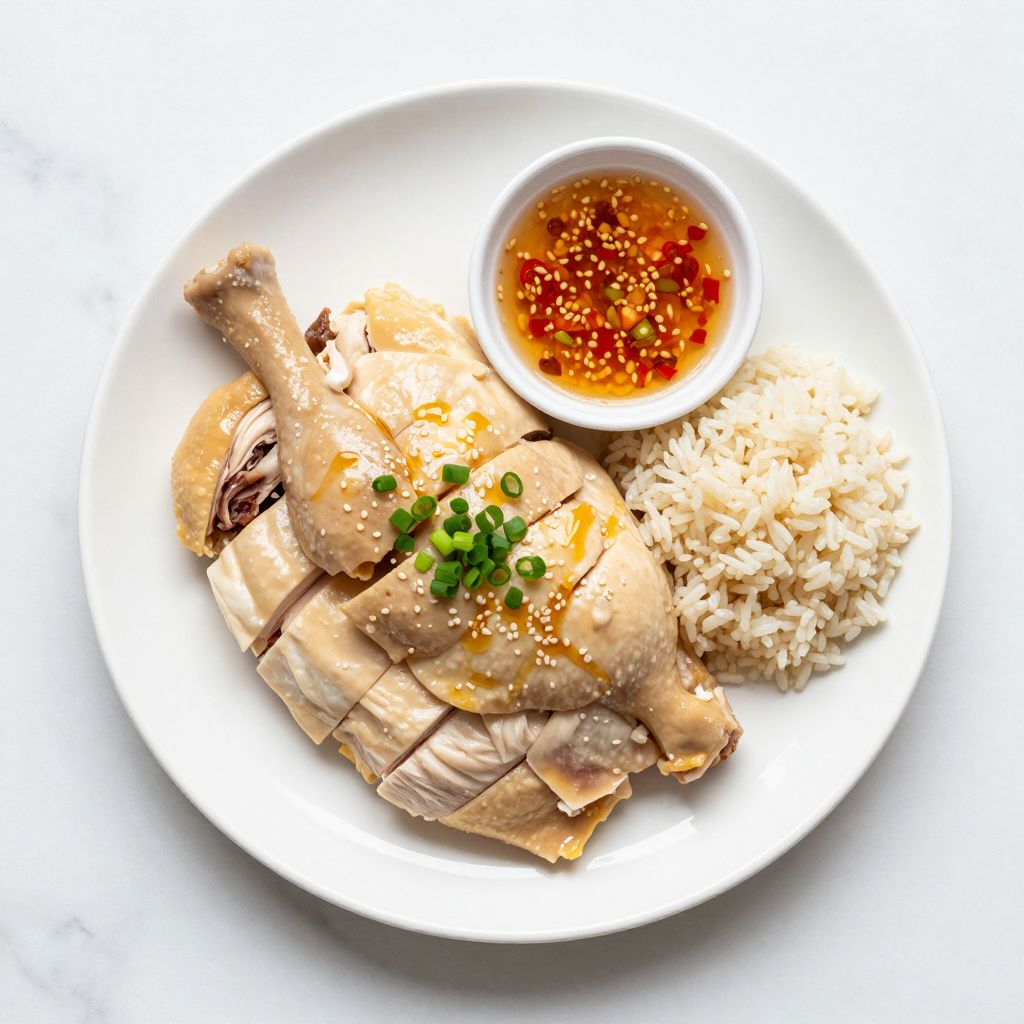
Hainanese Chicken
Ingredients
Equipment
Method
- Let the whole chicken sit at room temperature for 15 minutes; pat dry inside and out with paper towels and tuck the wing tips under the body.
- In a large stockpot, bring 8 cups of water or chicken stock to a rolling boil over high heat.
- Add the sliced ginger, scallions, and 1 tablespoon of salt to the boiling liquid and stir to combine.
- Lower the chicken breast-side down into the pot; once the liquid returns to a boil, reduce heat to maintain a gentle simmer, cover, and poach for 25 to 30 minutes.
- Insert a meat thermometer into the thickest part of the thigh without touching bone; it should read 165°F. If not, cover and simmer 3 to 5 more minutes.
- Remove the chicken from the broth and let rest on a cutting board for 10 minutes; strain the broth, reserving 1.5 cups for the rice and 1 tablespoon for the sauce.
- Heat 2 tablespoons vegetable oil in a medium saucepan over medium heat; add minced ginger and garlic and cook for 30 seconds until fragrant.
- Add rinsed jasmine rice and stir for 1 to 2 minutes to toast; pour in 1.5 cups reserved broth and 1 teaspoon salt, bring to a simmer, cover, reduce heat to low, and cook for 15 to 18 minutes without lifting the lid.
- Remove the rice from heat, let stand covered for 5 minutes, then fluff with a fork and stir in chopped scallions.
- In a small bowl, combine red chilies, minced garlic, minced ginger, lime juice, soy sauce, reserved 1 tablespoon broth, sesame oil, and sugar; let sit for at least 5 minutes.
- Cut the rested chicken into quarters or slice off the bone, arrange on a platter, drizzle with sesame oil, and serve alongside the ginger rice and chili-lime sauce.