
The warm aroma of freshly baked sourdough can transport you back to cozy bakeries and friendly gatherings. This Basic Sourdough Recipe is not just a loaf; it’s a delightful adventure in fermentation that results in a crusty, tangy bread perfect for sandwiches or simply slathered with butter.
Why You’ll Love This Recipe
This recipe is your ultimate guide to creating a stunning sourdough loaf at home.
- Ultra-crispy crust combined with a chewy interior.
- A naturally leavened flavor that dazzles taste buds.
- Surprisingly simple, requiring minimal ingredients.
- Perfect for sharing, yet entirely satisfying on your own.
My Experience Making This Recipe
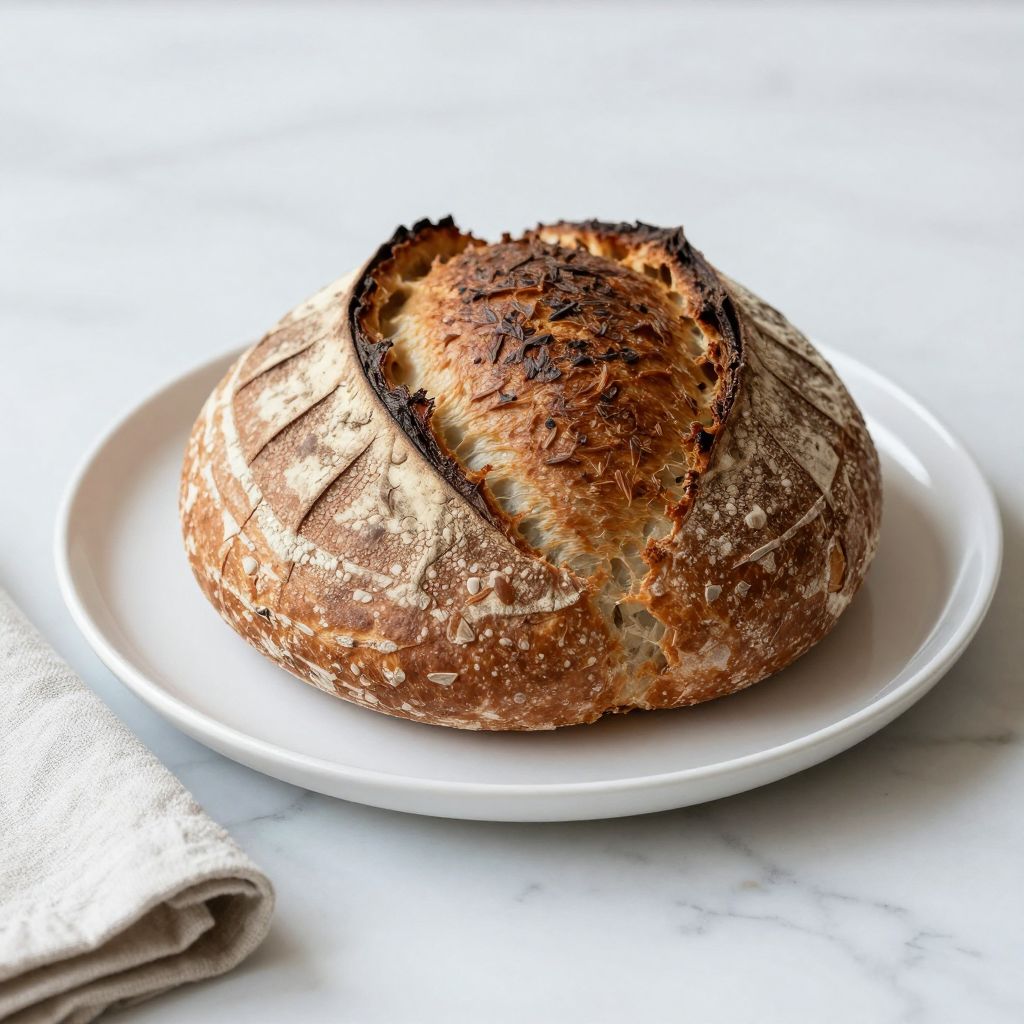
The first time I pulled a loaf from the oven, I was mesmerized by the golden crust and the wisps of steam that danced away. The anticipation as I sliced into it, revealing the airy crumb, was pure bliss.
Friends raved about its tangy flavor and told me it was the best sourdough they’d ever had. Watching their faces light up was worth every minute spent waiting for the dough to rise.
Recipe Overview
- Recipe Name: Basic Sourdough Recipe
- Servings: 1 loaf
- Prep Time: 30 minutes (plus 12-24 hours fermentation)
- Cook Time: 45 minutes
- Total Time: 12-24 hours
- Course: Bread
- Cuisine: American
- Calories per Serving: 200
Equipment You Will Need
- Large mixing bowl
- Bench scraper
- Proofing basket (or a bowl lined with a kitchen towel)
- Dutch oven
- Instant-read thermometer
- Kitchen scale (optional, but recommended)
Ingredients for Basic Sourdough Recipe
- 500g bread flour – Provides the structure and chewiness.
- 350g water – Hydration for a good crumb.
- 100g active sourdough starter – The magic leavening agent.
- 10g salt – Enhances flavor and controls fermentation.
Ingredient Notes and Substitutions
- Bread flour: Creates the desired gluten structure; all-purpose flour can be used, but the texture may be different.
- Active sourdough starter: Key for rise; can substitute with commercial yeast (use around 2g), but flavor won’t match.
- Salt: Critical for flavor; kosher salt works well if you want to replace it.
How to Make Basic Sourdough Recipe
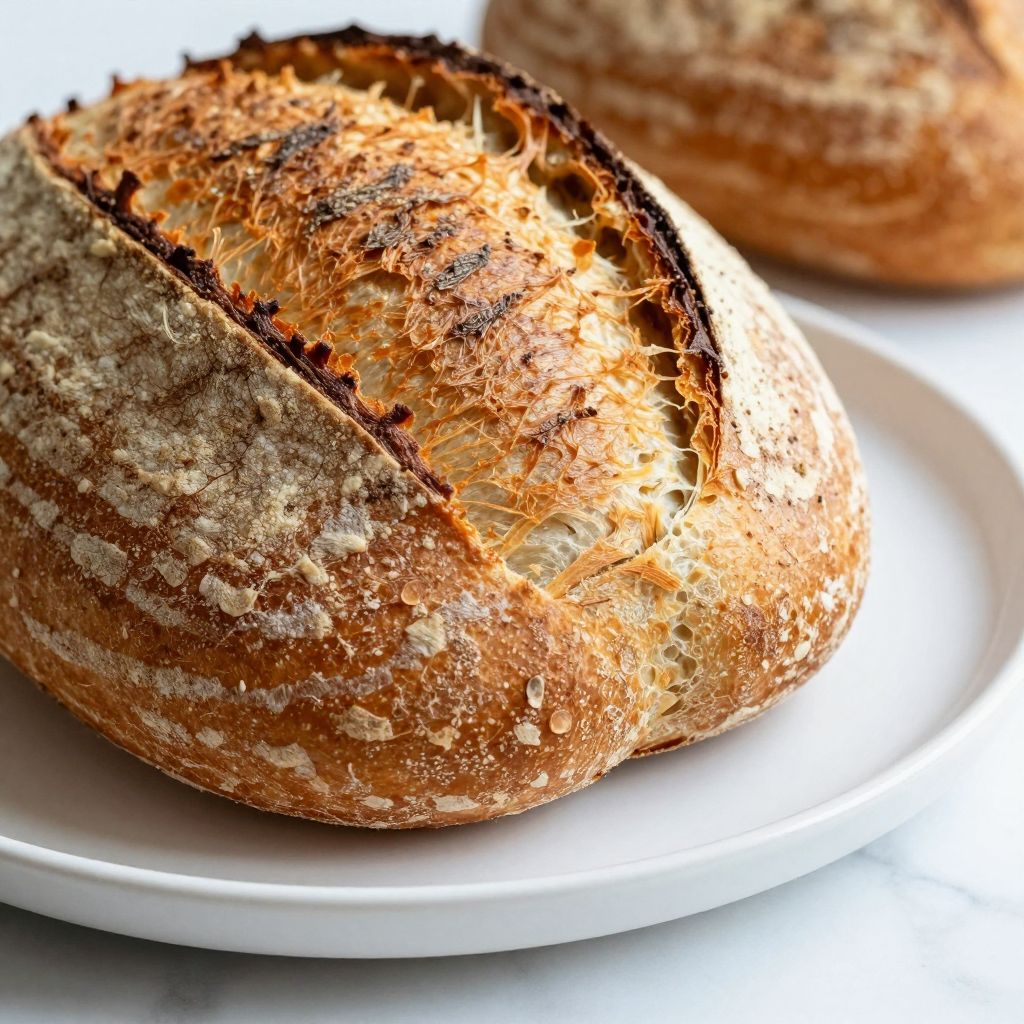
Step 1: Mix the Dough
In a large bowl, combine the bread flour, water, and sourdough starter. A well-developed dough starts with thorough mixing to avoid dry flour spots.
Step 2: Autolyse
Cover the bowl and let it rest for 30 minutes. This step hydrates the flour, which helps develop gluten without overworking the dough.
Step 3: Add Salt
After resting, sprinkle the salt over the dough and mix until fully integrated. Salt strengthens the dough structure and enhances flavor.
Step 4: Bulk Fermentation
Cover the bowl and let it rise for 4-6 hours at room temperature. Perform stretch and fold every hour to develop gluten strength further.
Step 5: Shape the Dough
Once the dough has doubled, gently transfer it to a floured surface. Carefully shape it into a round or oval shape by tucking edges into the center.
Step 6: Proof the Dough
Place the dough seam-side up in a proofing basket or bowl. Cover and let it rest for 1-2 hours or until nearly doubled.
Step 7: Preheat the Oven
Preheat your oven to 450°F (230°C) and place the Dutch oven inside to heat. A hot oven is crucial for achieving that beautiful, crisp crust.
Step 8: Bake the Bread
Carefully transfer the dough to the preheated Dutch oven, score the top with a sharp blade, and cover. Bake for 30 minutes covered, then 15 minutes uncovered until golden brown.
Pro Tip: Let your sourdough cool completely before slicing; this prevents a gummy texture.
Tips for the Best Basic Sourdough Recipe
- Use a kitchen scale for precise measurements; baking is a science.
- Experiment with different flours; whole wheat or rye can add depth.
- Keep your starter healthy and active; regular feedings are key.
- Control dough temperature; warmer environments speed up fermentation.
- Practice patience; good sourdough takes time to develop flavor.
Common Mistakes to Avoid
- Skipping the autolyse; it leads to tougher bread without the desired texture.
- Not allowing enough fermentation time; this results in dense loaves.
- Scoring too shallow; a deep score helps the loaf expand properly.
- Baking in a cold oven; this can prevent proper oven spring.
Serving Suggestions
This sourdough is delightful on its own or dressed up a bit. Pair it with:
- Homemade jams or butters
- Avocado toast with a sprinkle of salt
- Your favorite sandwich fillings
- Cheese and charcuterie boards
Variations to Try
- Add herbs or spices for an extra kick, like rosemary or garlic.
- Incorporate cheese for a savory twist; try shredded cheddar.
- Fold in dried fruits or nuts for added texture and flavor.
- Experiment with a whole grain version by substituting some all-purpose flour.
Dietary Adaptations
- Gluten-Free: Use a gluten-free flour blend; texture will vary.
- Dairy-Free: Naturally dairy-free; this recipe is perfect as is.
- Vegan: No eggs or dairy used; a safe choice for vegans.
- Low-Carb/Keto: Sourdough is not keto-friendly; explore almond flour alternatives.
Storage and Reheating
Refrigerator
Store sliced sourdough in an airtight container. It stays fresh for about 3-5 days.
- Wrap slices in parchment and store.
- Keep in a bread box for longer freshness.
Freezer
To freeze, wrap the whole loaf tightly in plastic. It can last for up to 3 months.
- Slice before freezing for convenience.
- Use a freezer-safe bag for more protection.
Reheating
Reheat in a 350°F (175°C) oven for about 10 minutes. This revives the crust.
- For best results, sprinkle water on the crust before reheating.
- Microwave quickly for soft bread, but expect a chewy texture.
Nutrition Information
| Nutrient | Amount |
|---|---|
| Calories | 200 |
| Total Fat | 1g |
| Saturated Fat | 0g |
| Carbohydrates | 41g |
| Fiber | 2g |
| Sugar | 0g |
| Protein | 7g |
| Sodium | 400mg |
| Cholesterol | 0mg |
This nutritional information is approximate and will vary based on specific ingredients and methods.
Frequently Asked Questions
Can I use regular yeast instead of sourdough starter?
Yes, but the flavor and texture will change significantly since sourdough develops unique characteristics.
Can I make this bread ahead of time?
Absolutely! You can mix the dough and let it ferment overnight in the fridge for improved flavor.
How should I store leftover sourdough?
Wrap it in plastic or cloth, and store in an airtight container to keep it fresh.
Why is my sourdough dense?
This could be due to under-fermentation or insufficient stretching of the dough during the bulk rise.
Can I use whole wheat flour?
Yes, replacing part of the bread flour with whole wheat will add a nutty flavor but may impact the dough’s rise.
Final Thoughts
Making sourdough at home is a rewarding experience that fills your kitchen with delightful aromas. I encourage you to try this recipe and embrace the process; perfecting it is part of the fun!
For more delicious baking, check out this same-day sourdough bread recipe or the classic King Arthur sourdough recipe for more inspiration.
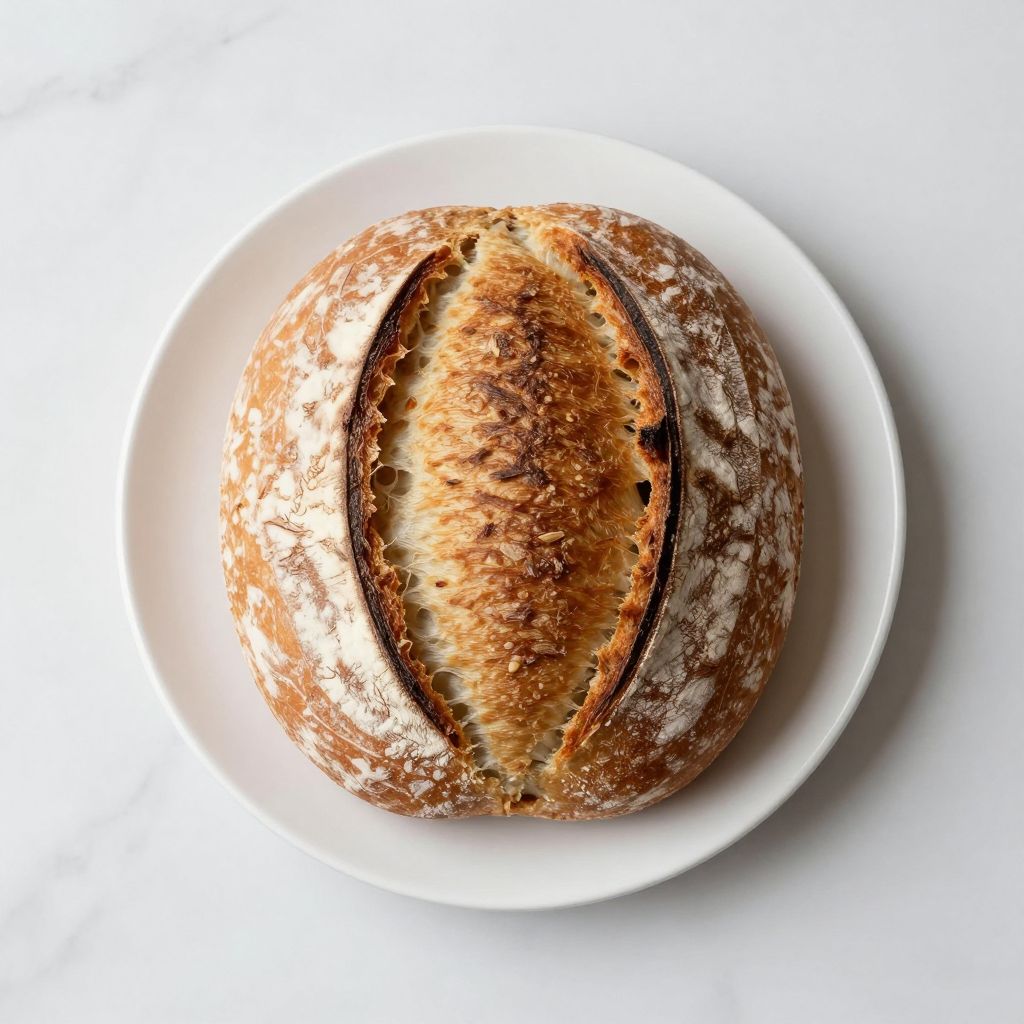
Basic Sourdough Recipe
Ingredients
Equipment
Method
- In a large bowl, combine 500g bread flour, 350g water, and 100g active sourdough starter; mix until no dry spots remain.
- Cover the bowl and let the dough rest (autolyse) for 30 minutes at room temperature.
- Sprinkle 10g salt over the dough and mix until fully integrated, strengthening the dough structure.
- Cover and bulk ferment for 4–6 hours at room temperature, performing a stretch-and-fold every hour.
- Once doubled in size, transfer dough to a floured surface and shape into a round or oval by tucking edges into the center.
- Place shaped dough seam-side up in a proofing basket, cover, and proof for 1–2 hours until nearly doubled.
- Preheat oven to 450°F (230°C) and place the Dutch oven inside for at least 30 minutes to heat through.
- Carefully transfer dough to the hot Dutch oven, score the top, cover, and bake for 30 minutes covered, then 15 minutes uncovered until golden brown and internal temperature reaches about 205°F (96°C).