
The bright, herbaceous punch of gremolata hitting your palate is like a wake-up call for your taste buds, especially when it crowns a slow-cooked osso buco or grilled fish. Gremolata is one of those deceptively simple Italian condiments that transforms any dish from ordinary to restaurant-worthy with just a handful of fresh ingredients and a quick chop.
This recipe delivers maximum impact with minimal effort, making it perfect for home cooks who want to add sophistication to weeknight dinners without spending hours in the kitchen. The combination of lemon zest, fresh parsley, and garlic creates a flavor profile that’s simultaneously bright, herbaceous, and garlicky, cutting through rich dishes and elevating everything from Milanese risotto to grilled vegetables.
Why You’ll Love This Recipe
Gremolata checks all the boxes for a weeknight flavor hack that tastes like you spent way more effort than you actually did.
- Takes five minutes to make from start to finish.
- Uses just three ingredients you probably have on hand already.
- Cuts through rich, heavy dishes with bright, fresh acidity.
- Works on vegetables, fish, meat, soups, and grain bowls.
- Stores for up to a week, so you can make it ahead.
My Experience Making This Recipe
I first discovered gremolata at an Italian restaurant while ordering osso buco, and I was immediately hooked by how this tiny sprinkle of chopped herbs and zest completely changed the entire dish. The lemon zest gave it a floral brightness, the parsley added freshness, and the garlic brought a subtle bite that made every bite feel alive.
Since then, I’ve been throwing gremolata on everything from grilled fish to roasted cauliflower, and it never disappoints. My family actually requests it now, which tells you something about how much flavor three ingredients can deliver.
The best part is watching people’s faces light up when they taste it and ask what you did differently to the dish. You get to feel like a kitchen genius without actually spending more than a few minutes chopping.
Recipe Overview
- Recipe Name: Gremolata
- Servings: Makes approximately 1/2 cup (8 servings as a garnish)
- Prep Time: 5 minutes
- Cook Time: 0 minutes
- Total Time: 5 minutes
- Course: Condiment or Garnish
- Cuisine: Italian
- Calories per Serving: 15
Equipment You Will Need
- Microplane zester or box grater for zesting the lemon
- Sharp chef’s knife for chopping herbs and garlic
- Cutting board
- Small mixing bowl
- Measuring spoons
Ingredients for Gremolata
- 3 lemons, zest only (about 3 tablespoons of zest)
- 1 cup fresh flat-leaf parsley, finely chopped (about 1 large bunch)
- 4 cloves garlic, minced very fine (about 2 teaspoons)
- 1/4 teaspoon fine sea salt
- Pinch of freshly ground black pepper
Ingredient Notes and Substitutions
- Lemon Zest: The zest provides the bright, citrus backbone that makes gremolata shine. If you can’t find fresh lemons, lime zest works beautifully and gives you a slightly different tropical note, though you’ll lose some of that classic Italian character.
- Flat-Leaf Parsley: This herb brings freshness and a mild peppery undertone that curly parsley can’t quite match. Curly parsley is waxier and more bitter, but you can use it in a pinch; just use slightly less since the flavor is more pronounced.
- Garlic: Raw garlic provides a sharp, pungent bite that awakens the other flavors. If you prefer a milder garlic flavor, reduce the amount to 2 cloves, or use roasted garlic for a sweeter, mellower result.
- Salt: Sea salt enhances all the flavors without overpowering them. Kosher salt works fine, but avoid iodized table salt, which can taste metallic.
How to Make Gremolata
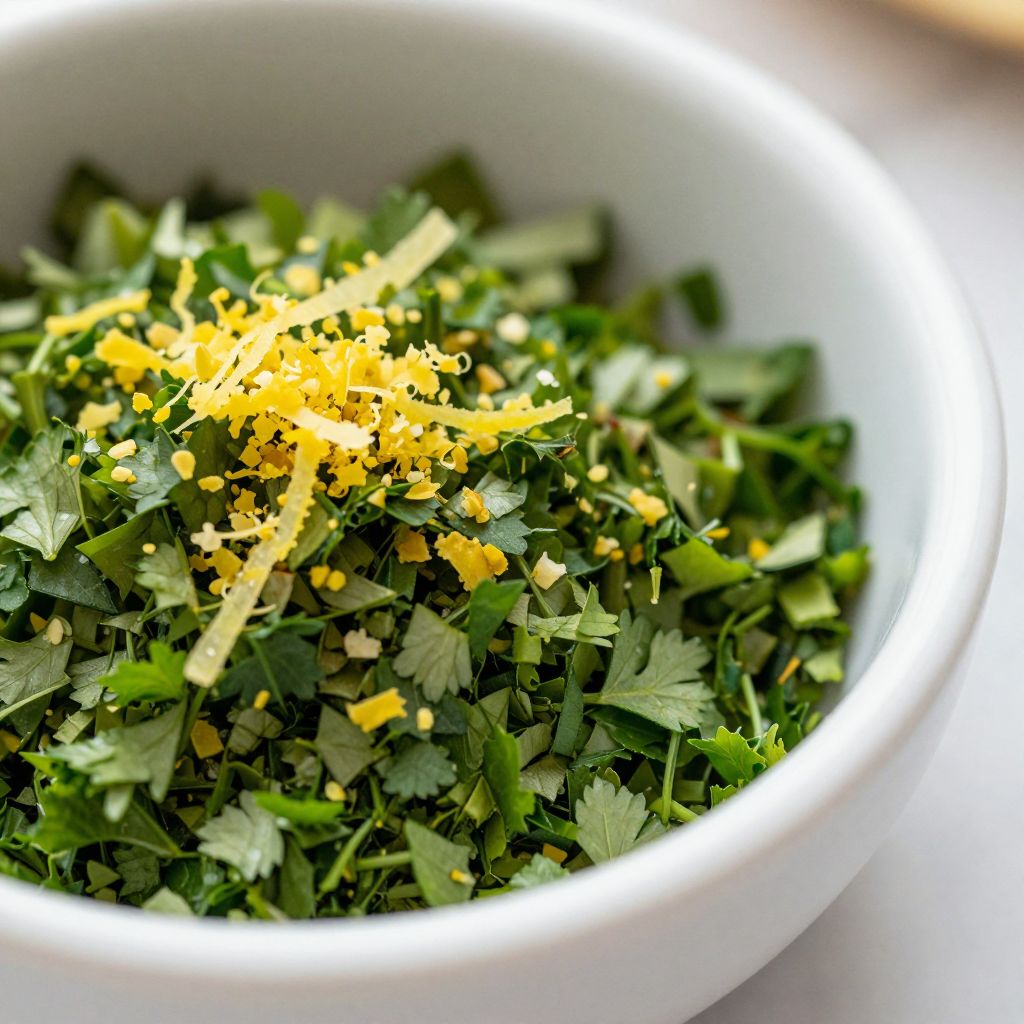
Step 1: Zest Your Lemons
Use a microplane zester to remove the yellow zest from three lemons, being careful to avoid the bitter white pith underneath. You want about three tablespoons of zest total, which typically comes from three medium lemons.
Step 2: Wash Your Parsley
Rinse fresh flat-leaf parsley under cold water and pat it dry completely with paper towels. Wet herbs will clump together when you chop them, making it harder to get an even, fine texture.
Step 3: Remove Parsley Leaves from Stems
Pull the parsley leaves away from the tough stems, discarding the stems or saving them for stock. You want only the tender leaves for gremolata.
Step 4: Chop the Parsley Finely
Gather the parsley leaves into a tight bunch and chop them very finely with a sharp chef’s knife, using a rocking motion. Fine pieces ensure the gremolata distributes evenly across your dish.
Step 5: Mince the Garlic
Peel four cloves of garlic and mince them as fine as possible with your knife. The smaller the pieces, the more evenly the garlic flavor will distribute throughout the condiment.
Step 6: Combine All Ingredients
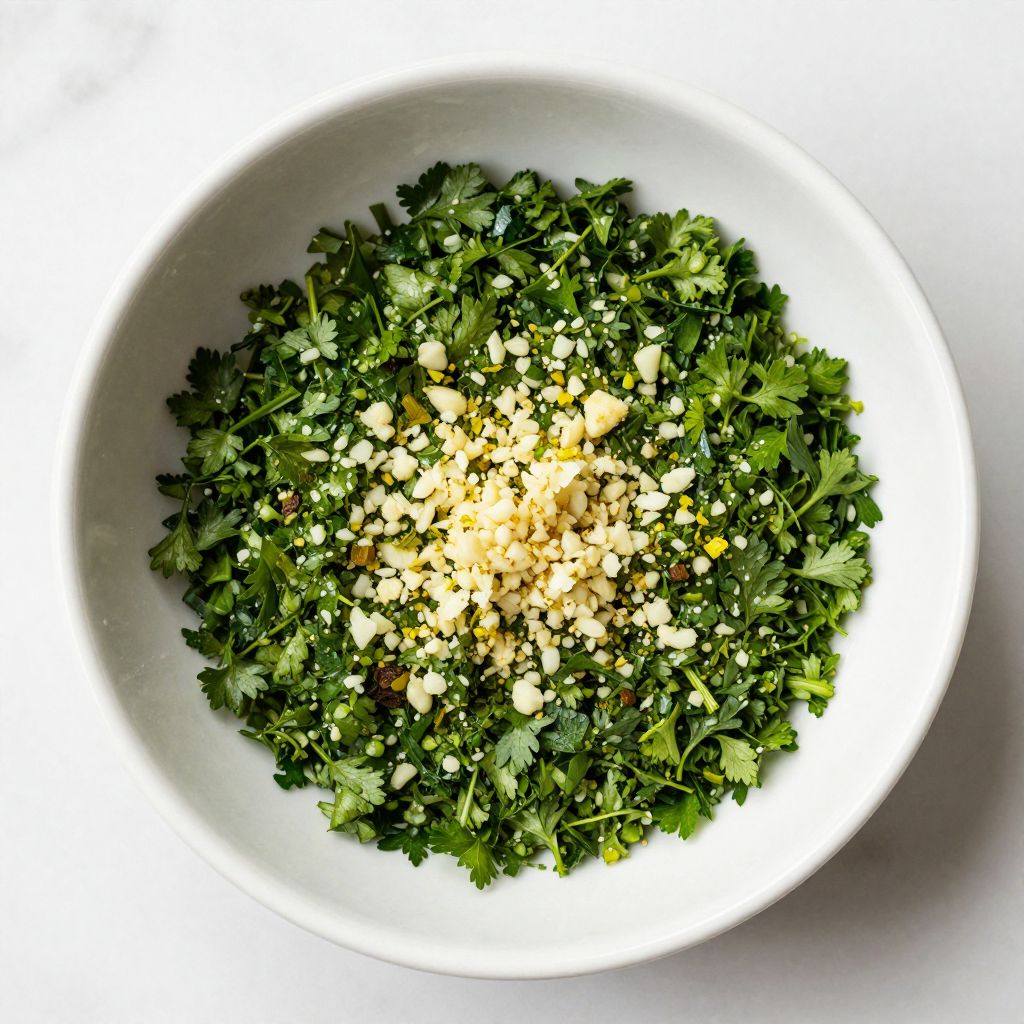
Place the lemon zest, chopped parsley, and minced garlic into a small bowl. Stir them together gently to combine.
Step 7: Season to Taste
Add 1/4 teaspoon of fine sea salt and a pinch of freshly ground black pepper. Taste a tiny pinch and adjust seasoning as needed; you want the salt to enhance the other flavors without tasting salty.
Step 8: Let It Rest (Optional)
Let the gremolata sit for a few minutes at room temperature before serving, allowing the flavors to meld slightly. You can serve it immediately, but five to ten minutes helps everything marry together.
Pro Tip: Make gremolata right before serving so the parsley stays bright green and the flavors are at their most vibrant. If you must make it ahead, cover it tightly and store it in the refrigerator for up to four days, though the color will darken slightly.
Tips for the Best Gremolata
- Use a microplane zester instead of a box grater to get fine, fluffy zest that distributes evenly. The texture matters because large zest pieces can overpower individual bites.
- Dry your parsley thoroughly before chopping it, or you’ll end up with a wet, clumpy paste instead of a light, bright mixture.
- Mince your garlic very finely by hand or on a cutting board rather than using a food processor, which can make it watery and unevenly sized.
- Taste as you go when adding salt, since you can always add more but you can’t take it out.
- Zest your lemons fresh each time you make gremolata; pre-zested lemon loses its aromatic oils and won’t taste as bright.
- Keep your knife sharp when chopping herbs; dull blades bruise the parsley and release bitter compounds.
Common Mistakes to Avoid
- Using bottled garlic or pre-minced garlic, which tastes tinny and loses the fresh bite that makes gremolata special.
- Zesting too deeply and including the white pith, which adds bitterness and changes the flavor profile from bright to astringent.
- Chopping the ingredients in a food processor, which bruises the delicate herbs and creates a mushy texture instead of a light, fresh condiment.
- Letting gremolata sit for too long before serving; the parsley will oxidize and turn dark, and the flavors become less vibrant.
- Using curly parsley instead of flat-leaf, which is more bitter and will overpower the delicate balance of lemon and garlic.
Serving Suggestions
Gremolata shines as a finishing touch on dishes that benefit from brightness and acidity. Spoon it generously over your finished dish just before serving so it stays fresh and visually striking.
- Over osso buco or braised meat dishes to cut through the richness of the sauce.
- On top of grilled or baked fish like branzino, halibut, or salmon.
- Sprinkled over roasted vegetables like cauliflower, Brussels sprouts, or zucchini.
- Stirred into soups like minestrone or white bean soup for a bright finish.
- Over creamy risotto, polenta, or pasta with butter and cheese.
Variations to Try
- Gremolata with Anchovy: Finely mince one or two anchovy fillets and fold them into the gremolata for an umami-rich version that pairs beautifully with grilled fish and vegetables. This variation adds depth and salty complexity.
- Spicy Gremolata: Add 1/4 teaspoon of red pepper flakes or a pinch of cayenne pepper to your gremolata for heat. This works wonderfully on grilled meats and roasted vegetables.
- Gremolata with Capers: Finely chop a tablespoon of brined capers and mix them in for a tangy, briny twist. This version pairs perfectly with seafood and light pasta dishes.
- Orange Gremolata: Swap half the lemon zest for orange zest for a warmer, slightly sweeter flavor profile. This variation complements duck, pork, and rich vegetable dishes beautifully.
- Gremolata with Mint: Replace half the parsley with fresh mint for a more Mediterranean, herbaceous take. This works especially well on lamb and light summer soups.
Dietary Adaptations
- Gluten-Free: Gremolata is naturally gluten-free with no modifications needed; it contains only fresh herbs, zest, and garlic.
- Dairy-Free: This recipe contains no dairy ingredients, so it works perfectly for dairy-free diets and needs no changes.
- Vegan: Gremolata is entirely plant-based and vegan-friendly, making it an excellent finishing touch for vegan dishes that need brightness and flavor.
- Low-Carb/Keto: With virtually no carbohydrates, gremolata is an ideal keto-friendly condiment for meats, fish, and vegetables with zero carb trade-offs.
Storage and Reheating
Refrigerator
Store gremolata in an airtight container in the refrigerator for up to four days. The color will darken as the parsley oxidizes, but the flavor remains good.
- Place in a glass container with a tight-fitting lid.
- Keep away from strong-smelling foods, as the delicate herb flavors absorb odors easily.
- Allow it to come to room temperature for five minutes before serving for the best flavor.
Freezer
Gremolata doesn’t freeze well because the delicate herb structure breaks down and the texture becomes mushy when thawed. I recommend making it fresh each time rather than freezing it.
- If you must freeze it, spread it on a parchment-lined tray, freeze for two hours, then transfer to a freezer bag.
- Use within one month and thaw in the refrigerator before serving.
- Expect some loss of brightness and texture quality.
Reheating
Gremolata is a fresh condiment and should never be heated, as heat destroys the delicate flavors and bright color you worked to create. Always serve it cold or at room temperature as a garnish.
- Add it to warm dishes just before serving so the herbs don’t wilt.
- Never cook gremolata into a dish; it works best as a finishing touch.
Nutrition Information
| Nutrient | Amount |
|---|---|
| Calories | 15 |
| Total Fat | 0.3g |
| Saturated Fat | 0g |
| Carbohydrates | 3g |
| Fiber | 0.5g |
| Sugar | 0.5g |
| Protein | 0.5g |
| Sodium | 70mg |
| Cholesterol | 0mg |
The nutritional values are based on one serving being approximately one tablespoon of gremolata. These values are estimates and can vary based on ingredient sizes and preparation methods.
Frequently Asked Questions
Can I make gremolata without garlic?
Yes, you can omit the garlic entirely if you don’t enjoy raw garlic or have an aversion to it. The gremolata will be fresher and more herbaceous, focusing entirely on the bright lemon and parsley flavors.
How long does gremolata last?
Gremolata keeps in an airtight container in the refrigerator for up to four days, though it’s best enjoyed within the first two days when the flavors are brightest and the color is most vibrant. The parsley will gradually darken as it oxidizes.
What can I serve gremolata on besides osso buco?
Gremolata works beautifully on grilled or baked fish, roasted vegetables, creamy soups, risotto, polenta, braised meats, and even grain bowls. It’s basically a finishing touch for any dish that benefits from brightness and fresh acidity.
Can I use bottled lemon juice instead of fresh zest?
No, bottled lemon juice won’t work because gremolata specifically relies on the aromatic oils in fresh lemon zest, not juice. The juice would make the mixture wet and muddy the delicate herb flavors.
Is gremolata the same as chimichurri?
No, they’re different condiments. Gremolata is an Italian garnish made with lemon zest, parsley, and garlic, while chimichurri is an Argentine sauce made with herbs, garlic, vinegar, and olive oil that’s much more liquid. If you love fresh herb condiments, you might also enjoy trying chimichurri with cilantro or exploring an authentic chimichurri recipe for a completely different flavor experience.
Can I make gremolata in advance for a dinner party?
You can make it up to four days ahead and store it in the refrigerator, but it tastes best when made within a few hours of serving. For a dinner party, chop your ingredients ahead of time and combine them just before your guests arrive.
Final Thoughts
Gremolata is proof that you don’t need complicated techniques or exotic ingredients to create restaurant-quality results at home. This Italian classic takes five minutes to make and transforms any dish from forgettable to memorable with its bright, fresh flavor.
Give this recipe a try on your next grilled fish, braised meat, or roasted vegetable dish, and watch your family and friends ask what you did differently. They won’t believe something this simple can taste this good.
If you enjoyed learning to make gremolata, explore more fresh herb condiments and flavor-boosting garnishes to add to your cooking repertoire. Fresh, vibrant finishes are the secret to making everyday meals feel special and restaurant-worthy.
Gremolata
Ingredients
Equipment
Method
- Use a microplane zester to remove the yellow zest from three lemons, about 3 tablespoons total, avoiding the white pith.
- Rinse the parsley under cold water and dry completely with paper towels.
- Strip the parsley leaves from the stems, discarding the stems.
- Finely chop the parsley leaves using a sharp chef's knife.
- Peel and mince four cloves of garlic as finely as possible.
- In a small mixing bowl, stir together the lemon zest, chopped parsley, and minced garlic.
- Season with 1/4 teaspoon fine sea salt and a pinch of freshly ground black pepper, then taste and adjust seasoning as needed.
- Let the gremolata rest at room temperature for 5 to 10 minutes before serving to allow the flavors to meld.