
The first bite of warm persimmon bread takes you straight to autumn, with its honeyed sweetness and tender crumb that practically melts on your tongue. This is the kind of recipe that quietly becomes a family tradition, passed around at holiday gatherings and requested year after year.
Persimmon bread hits that perfect sweet spot between quick bread simplicity and bakery-quality flavor. The fruit adds natural moisture and a subtle spiced sweetness that feels luxurious without being overly heavy, and the baking process fills your kitchen with a scent so good you’ll want to bottle it.
Why You’ll Love This Recipe
This recipe delivers a moist, tender crumb with just enough spice to make every slice interesting. It comes together quickly, requires basic pantry ingredients, and tastes even better the next day.
- Naturally sweet and moist from fresh persimmons
- Warm spices like cinnamon, nutmeg, and cloves add depth without overpowering
- Ready in under two hours from mixing to cooling
- Freezes beautifully for up to three months
- Works perfectly for breakfast, snacks, or dessert
My Experience Making This Recipe
I first made persimmon bread on a crisp October afternoon when a neighbor dropped off a bag of perfectly ripe Fuyu persimmons from her tree. I had no idea what to do with them, so I searched my recipe files and found this gem buried in my collection.
The first loaf came out golden and fragrant, and I let it cool for exactly three minutes before slicing into it (I have no patience). The texture was impossibly soft, almost custardy in the center, and the flavor reminded me of pumpkin bread’s sophisticated older sibling.
My kids devoured half the loaf at breakfast the next day, which tells you everything you need to know about how this tastes. Now I make a triple batch every fall and freeze them for unexpected cravings throughout the season.
Recipe Overview
- Recipe Name: Persimmon Bread
- Servings: 12 slices (1 loaf)
- Prep Time: 15 minutes
- Cook Time: 50 to 60 minutes
- Total Time: 1 hour 15 minutes
- Course: Breakfast, Dessert, or Snack
- Cuisine: American
- Calories per Serving: 245
Equipment You Will Need
- 9×5 inch loaf pan
- Medium mixing bowl
- Large mixing bowl
- Whisk
- Wooden spoon or rubber spatula
- Measuring cups and spoons
- Oven
- Cooling rack
- Paper towels or kitchen towel
Ingredients for Persimmon Bread
- 2 cups all-purpose flour
- 1 1/2 cups granulated sugar
- 1 teaspoon baking soda
- 1 teaspoon ground cinnamon
- 1/2 teaspoon ground nutmeg
- 1/4 teaspoon ground cloves
- 1/4 teaspoon salt
- 3/4 cup fresh persimmon puree
- 1/3 cup vegetable oil
- 2 large eggs, beaten
- 1 teaspoon vanilla extract
- 1/2 cup chopped walnuts or pecans (optional but recommended)
Ingredient Notes and Substitutions
- Persimmon puree is the star here, providing natural moisture and subtle sweetness that regular baking ingredients cannot replicate. If you cannot find fresh persimmons, you can substitute with canned persimmon puree, though fresh will give the best flavor and texture.
- All-purpose flour is standard for this bread, creating a tender crumb without being too delicate. You can use whole wheat flour for up to 1/3 of the total flour, though this will make the bread denser and slightly earthier.
- Baking soda is essential here because it reacts with the natural acidity in persimmons to help the bread rise properly. Do not swap this for baking powder, as it will not activate correctly and your bread will be flat.
- The oil keeps the bread moist and tender for days after baking. You can substitute with melted butter, though this will make the crumb slightly less moist and richer tasting.
- Walnuts and pecans add texture and a subtle nuttiness that complements the spices beautifully. You can omit them entirely if you prefer a smoother texture, or swap them for chopped dried cranberries for a tart pop.
- Ground cinnamon, nutmeg, and cloves give this bread its signature warm spice profile. If you only have one or two of these, skip the others rather than using substitutes, as they are quite distinct in flavor.
How to Make Persimmon Bread
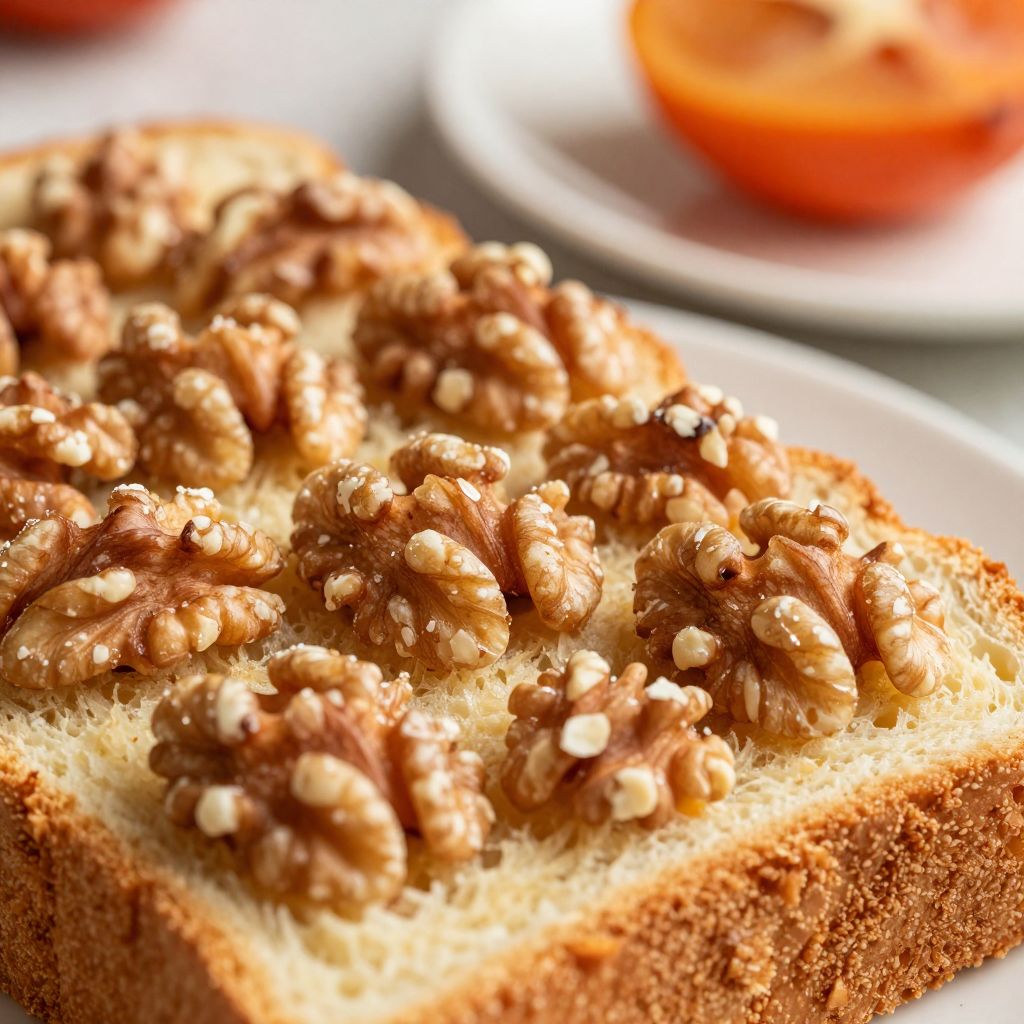
Step 1: Prepare Your Pan and Oven
Preheat your oven to 350 degrees Fahrenheit and position the rack in the center. Grease your 9×5 inch loaf pan generously with butter or cooking spray, making sure to coat the bottom and all four sides evenly so the bread releases cleanly after cooling.
Step 2: Make the Persimmon Puree
Cut 3 or 4 ripe Fuyu persimmons in half and scoop the soft flesh into a food processor or blender. Blend until completely smooth, then measure out 3/4 cup of puree for your recipe (you should have a bit extra for tasting, which I highly recommend).
Step 3: Combine Dry Ingredients
In a medium bowl, whisk together the flour, baking soda, cinnamon, nutmeg, cloves, and salt. This step distributes the leavening agent and spices evenly throughout the flour, preventing lumps and ensuring consistent flavor in every bite.
Step 4: Mix the Wet Ingredients
In a large bowl, whisk the persimmon puree, oil, beaten eggs, and vanilla extract together until fully combined and smooth. This creates an emulsion that will hydrate your dry ingredients and give the bread its characteristically moist texture.
Step 5: Combine Wet and Dry Ingredients
Pour the dry ingredients into the wet ingredients and fold gently with a rubber spatula or wooden spoon until just combined. Stop stirring as soon as you no longer see streaks of flour, because overmixing develops gluten and makes the bread tough and chewy instead of tender.
Step 6: Add the Nuts
Fold in the chopped walnuts or pecans until they are evenly distributed throughout the batter. If your nuts are large, chop them into pieces roughly the size of a pea so they bake through and distribute evenly.
Step 7: Transfer to the Pan
Pour the batter into your prepared loaf pan and smooth the top with your spatula to even it out. This ensures even baking and helps the bread rise uniformly as it bakes.
Step 8: Bake the Bread
Bake for 50 to 60 minutes, until a wooden toothpick inserted into the center comes out clean or with just a few moist crumbs clinging to it. The top should be golden brown and a bit springy when you press it gently with your finger.
Step 9: Cool and Release
Let the bread cool in the pan for 15 minutes, then turn it out onto a cooling rack to cool completely. Cooling in the pan for a few minutes helps the structure set so the bread releases cleanly, but leaving it too long makes it stick.
Pro Tip: The best time to slice your persimmon bread is the next day, after the flavors have settled and the crumb has firmed up just slightly. This also makes it much easier to get clean, pretty slices.
Tips for the Best Persimmon Bread
- Use fully ripe Fuyu persimmons that are soft to the touch and have a deep orange color. Underripe persimmons will be astringent and unpleasant, while overripe ones will have a jammy texture that works even better for puree.
- Measure your persimmon puree carefully and press it gently through a fine mesh sieve if you want an extra smooth batter. A few small chunks are fine and actually add pleasant texture, but you want mostly smooth puree for consistency.
- Do not skip the cooling period on the rack, even if you are eager to slice into it. This allows steam to escape and prevents the interior from becoming gummy.
- Store your finished bread wrapped in plastic wrap or in an airtight container so it stays moist throughout the week. This bread actually improves after a day or two as the flavors develop and the crumb sets up.
- If the top is browning too quickly before the center is done, tent it loosely with aluminum foil for the last 15 minutes of baking. This prevents burning while the interior continues to bake through.
- Let your eggs and other wet ingredients come to room temperature before mixing for the most even batter. Cold ingredients can make the batter lumpy and uneven.
Common Mistakes to Avoid
- Using unripe or astringent persimmons will make your bread taste bitter and unpleasant. Always taste a tiny piece of raw persimmon to confirm it is sweet before making the puree.
- Overmixing the batter develops gluten and creates a tough, dense crumb instead of the tender, moist texture you want. Mix only until the flour disappears, which takes about 30 seconds of folding.
- Opening the oven door repeatedly to check on the bread causes temperature drops that interfere with rising and baking. Check only once or twice, and use the toothpick test only at the end.
- Slicing the bread while it is still warm causes it to fall apart and creates a mushy texture. Wait at least a few hours, or preferably until the next day, to slice.
- Using too much spice can overwhelm the delicate persimmon flavor and make the bread taste like pumpkin pie. Measure your spices carefully and taste as you go if you are unsure.
Serving Suggestions
Persimmon bread shines on its own, but a few accompaniments make it even more special. Serve it slightly warm with a hot cup of coffee, or spread with cream cheese frosting for dessert.
- A thin spread of unsalted butter and a drizzle of honey
- Whipped cream cheese frosting for a more indulgent treat
- A dollop of Greek yogurt and a sprinkle of granola for a balanced breakfast
- Alongside fresh cinnamon tea or spiced chai
- Thinly sliced and served with a charcuterie board featuring sharp cheddar and candied pecans
Variations to Try
- Add 1/2 cup of chopped fresh ginger to the wet ingredients for a spicy kick that pairs beautifully with the persimmon sweetness. This variation works especially well if you enjoy bold, warming spices.
- Substitute half the granulated sugar with brown sugar for a molasses depth that makes the bread taste almost caramel-like. The brown sugar creates a slightly moister crumb as well.
- Fold in 1/2 cup of white chocolate chips along with the nuts for a sweet indulgence that softens slightly as it bakes. This variation tastes like a dessert bread rather than breakfast bread.
- Make mini loaves by dividing the batter among a muffin tin or small loaf pans, which bake in about 25 to 30 minutes and make excellent gifts. The crust-to-crumb ratio is higher in smaller loaves, so you get more texture contrast.
- Add 2 tablespoons of unsweetened cocoa powder to the dry ingredients for a subtle chocolate undertone that somehow works surprisingly well with persimmon. Use 1/4 teaspoon less baking soda when adding cocoa to balance the acidity.
Dietary Adaptations
- Gluten-free: Replace all-purpose flour with a one-to-one gluten-free baking blend, which will give you similar results with a very slightly grainier texture and a need to add 2 tablespoons more oil for moisture.
- Dairy-free: This recipe contains no dairy, so it is naturally dairy-free as written; just double-check that your chocolate chips (if using the variation) are dairy-free.
- Vegan: Replace the 2 eggs with a flax egg (2 tablespoons ground flaxseed mixed with 5 tablespoons water, left to sit for 5 minutes), and the result will be slightly more crumbly but still delicious.
- Low-carb or keto: This bread is not easily adaptable to low-carb diets due to the fruit and flour content; a better option would be to make a small-batch muffin with almond flour and a sugar substitute.
Storage and Reheating
Refrigerator
Wrap your persimmon bread tightly in plastic wrap or store it in an airtight container on the counter or in the refrigerator for up to five days. The bread will stay moist and the flavors will deepen over time.
- Wrapped bread keeps better than unwrapped, as plastic prevents it from drying out
- Do not store bread in a paper bag, as this accelerates moisture loss
Freezer
Freeze your wrapped persimmon bread for up to three months without any loss of quality or flavor. Thaw it on the counter for about four hours before serving, and it will taste almost exactly like freshly baked bread.
- Slice the bread before freezing for easy grab-and-go portions
- Wrap individual slices in plastic wrap or parchment paper for convenient storage
Reheating
To refresh a slice or two, wrap them in a damp paper towel and microwave for 20 to 30 seconds until warm and soft. For a whole loaf, wrap it in foil and warm in a 300-degree oven for 15 to 20 minutes until heated through.
- Microwave reheating is quick but can make the bread slightly dense
- Oven reheating takes longer but preserves the bread’s original tender texture
Nutrition Information
| Nutrient | Amount |
|---|---|
| Calories | 245 |
| Total Fat | 9g |
| Saturated Fat | 1g |
| Carbohydrates | 38g |
| Fiber | 1g |
| Sugar | 26g |
| Protein | 4g |
| Sodium | 195mg |
| Cholesterol | 32mg |
These values are approximate and based on standard USDA ingredient databases. Actual nutrition will vary based on specific brands and the exact size of your persimmons.
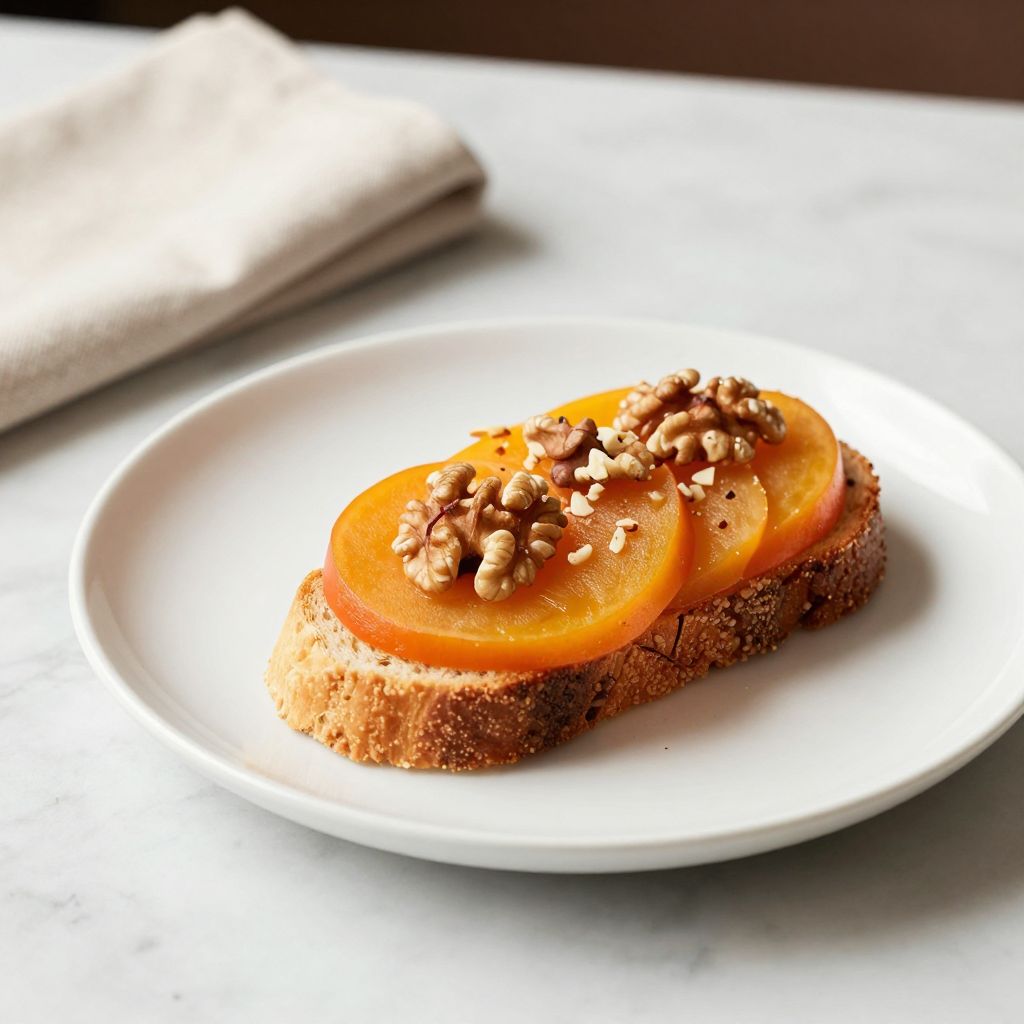
Frequently Asked Questions
Can I make persimmon bread if I cannot find fresh persimmons?
Yes, you can use canned persimmon puree, which you will find in specialty grocery stores or online. The flavor will be slightly milder than fresh, but the bread will still taste excellent and have the same texture.
How do I know if my persimmons are ripe enough?
Ripe Fuyu persimmons should be soft to the touch and feel almost custard-like inside when you cut them open. If they are hard, let them sit on your counter for a few more days; if they are mushy, they are overripe but still usable for puree.
Can I make this recipe ahead of time?
Absolutely. You can mix the batter up to four hours ahead and store it in the refrigerator, covered, then bake it whenever you are ready. The batter may thicken slightly, so add a tablespoon or two of water if needed before pouring into the pan.
Why is my bread too dry or dense?
Overmixing is usually the culprit, as it develops gluten and results in a tough crumb. Make sure you are folding gently and stopping as soon as the flour disappears, and also double-check that your oven temperature is accurate with an oven thermometer.
Can I add other dried fruits or mix-ins to this recipe?
Yes, you can add up to 1/2 cup of chopped dried cranberries, raisins, or apricots along with or instead of the nuts. Add them in Step 6, and they will plump up slightly as the bread bakes and add pockets of sweet-tart flavor.
Is this bread good for gift-giving?
It is perfect for gifts because it keeps for days, freezes beautifully, and tastes homemade and thoughtful. Wrap it nicely in cellophane and add a homemade label explaining the flavor, and it becomes a truly special present.
Final Thoughts
Persimmon bread is one of those quiet recipes that makes people stop mid-conversation and ask what smells so incredible. It is simple enough for a weekday breakfast but impressive enough to share at a fall potluck or package up for holiday gift-giving.
Once you make this recipe, you will find yourself hunting for persimmons every autumn just so you have an excuse to bake this again and again. The recipe is forgiving, the results are consistently delicious, and your kitchen will smell like you own a bakery for an entire afternoon.
If you enjoyed making persimmon bread, you might also love exploring other seasonal quick breads. Try our peach bread recipe for a summery twist, or reach for our banana bread recipe with oil when you want something equally moist and tender. Each one brings its own charm to your kitchen and your table.
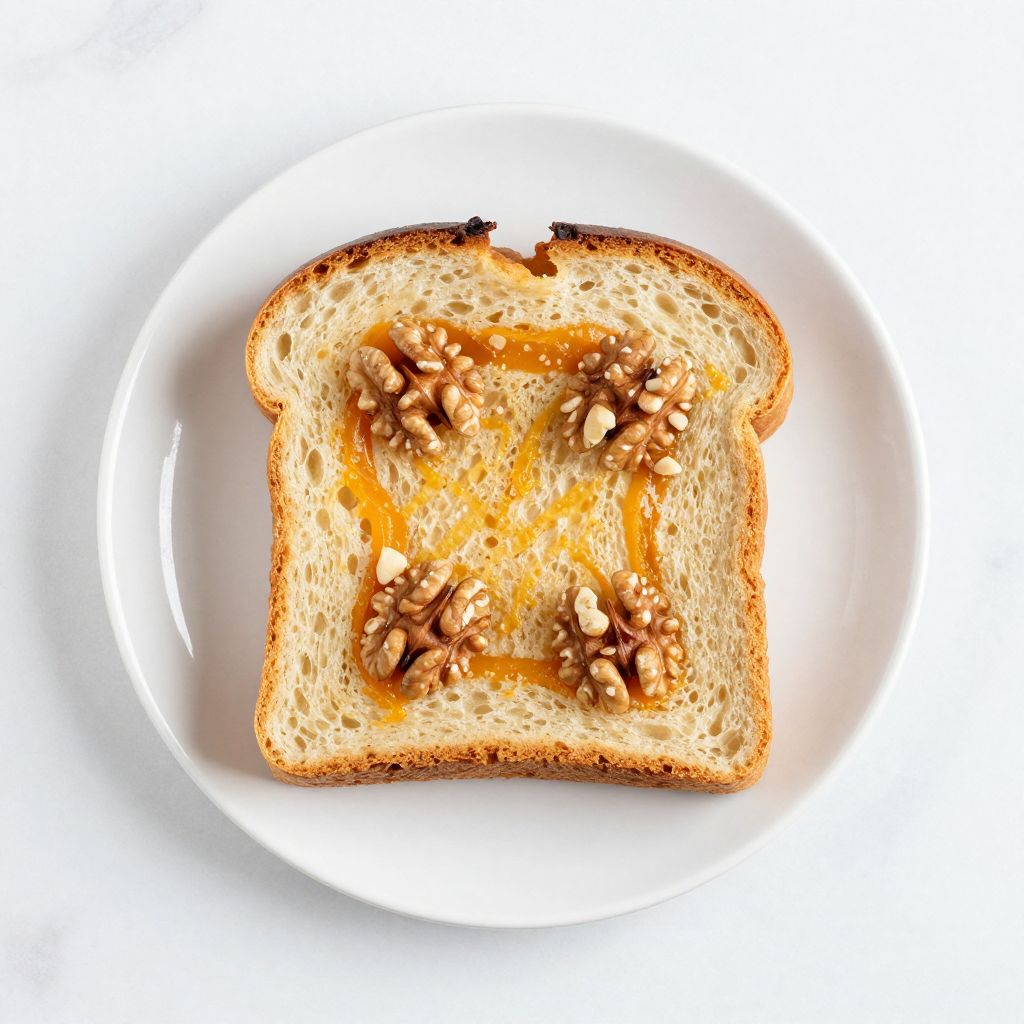
Persimmon Bread
Ingredients
Equipment
Method
- Preheat the oven to 350°F (175°C) and grease a 9x5 inch loaf pan with butter or cooking spray.
- Cut 3 to 4 ripe Fuyu persimmons in half, scoop out the flesh, and blend until smooth. Measure out 3/4 cup of puree.
- In a medium mixing bowl, whisk together 2 cups all-purpose flour, 1 teaspoon baking soda, 1 teaspoon ground cinnamon, 1/2 teaspoon ground nutmeg, 1/4 teaspoon ground cloves, and 1/4 teaspoon salt.
- In a large mixing bowl, whisk together 3/4 cup persimmon puree, 1/3 cup vegetable oil, 2 beaten eggs, and 1 teaspoon vanilla extract until smooth.
- Pour the dry ingredients into the wet ingredients and fold gently with a wooden spoon or rubber spatula until just combined, about 30 seconds; do not overmix.
- Fold in 1/2 cup chopped walnuts or pecans until evenly distributed.
- Pour the batter into the prepared loaf pan and smooth the top with a spatula.
- Bake for 60 minutes, or until a toothpick inserted into the center comes out clean and the top is golden brown.
- Let the bread cool in the pan for 15 minutes, then transfer to a cooling rack to cool completely before slicing.