
The first time I tasted Vietnamese coffee, I was sitting on a plastic stool in Hanoi at dawn, watching the dark brew drip slowly into sweetened condensed milk below. Vietnamese coffee is not just a drink; it’s a ritual that transforms a simple cup into something almost meditative, rich with the perfect balance of bitter and sweet.
This recipe deserves a spot in your rotation because it requires minimal equipment, produces restaurant-quality results, and costs a fraction of what you’d pay at a cafe. The combination of strong robusta coffee and creamy condensed milk creates a velvety, indulgent experience that works hot or iced.
Why You’ll Love This Recipe
Vietnamese coffee delivers bold flavor, silky texture, and genuine satisfaction in under five minutes. It’s a gateway into Vietnamese coffee culture without needing to travel or spend much money.
- Incredibly simple with just two main ingredients and one inexpensive tool
- Makes a naturally sweet, creamy coffee that feels like a treat
- Works perfectly hot in winter or iced during summer months
- Teaches you a traditional brewing method that slows you down
- Impresses friends and family with minimal effort or fuss
My Experience Making This Recipe
I’ve made this coffee dozens of times now, and each batch still feels special. The first time I used the right coffee and a proper Vietnamese phin filter, I immediately understood why this drink has such devoted fans.
The sensory experience is half the charm: watching the dark liquid pool beneath the filter, hearing the gentle trickle, and inhaling that earthy robusta aroma. My partner asked why I was taking so long to make coffee, then tasted it and understood instantly.
What surprised me most was how different this tastes from regular drip coffee, even when I use the same brewing time. The slow drip concentrates the flavor in a way that creates something bold yet smooth, never thin or watery.
Recipe Overview
- Recipe Name: Vietnamese Coffee
- Servings: 1
- Prep Time: 2 minutes
- Cook Time: 3 to 5 minutes
- Total Time: 5 to 7 minutes
- Course: Beverage
- Cuisine: Vietnamese
- Calories per Serving: 95
Equipment You Will Need
- Vietnamese phin filter (traditional metal drip filter)
- Small heat-safe cup or mug
- Kettle for heating water
- Spoon for stirring
- Optional: small thermometer to monitor water temperature
Ingredients for Vietnamese Coffee
- 2 tablespoons finely ground robusta coffee (or dark roast, medium-fine grind)
- 2 tablespoons sweetened condensed milk (the key ingredient for authentic flavor)
- 6 ounces hot water (around 195 to 205 degrees Fahrenheit)
- Pinch of salt (optional, brightens the flavor)
Ingredient Notes and Substitutions
- Robusta coffee: Robusta beans are darker, more bitter, and higher in caffeine than arabica, making them traditional for Vietnamese coffee. If you cannot find robusta, use a dark roast arabica, though the flavor will be slightly less intense and earthy.
- Sweetened condensed milk: This ingredient creates the signature creamy, sweet base that defines Vietnamese coffee. Regular milk, cream, or sweetener will produce a different drink altogether and won’t deliver the same richness or authenticity.
- Water temperature: Water that is too hot burns the delicate coffee oils and creates bitterness; water that is too cool brews slowly and unevenly. If you don’t have a thermometer, let boiling water sit for about 30 seconds before brewing.
- Salt: A pinch of salt (literally a grain or two) cuts through sweetness and brings out coffee complexity. Skip it if you prefer pure sweetness, but try it once to see the difference.
How to Make Vietnamese Coffee

Step 1: Prepare Your Phin Filter
Place your Vietnamese phin filter on top of your cup or mug, making sure it sits flat and stable. If your phin is new or hasn’t been used in a while, rinse it with hot water to warm the metal and ensure even extraction.
Step 2: Add the Coffee Grounds
Scoop 2 tablespoons of finely ground robusta coffee into the phin’s chamber. Use medium-fine grounds; if they are too coarse, water passes through without extracting flavor, and if too fine, the brew becomes muddy and over-extracted.
Step 3: Tamp Gently
Press the grounds down lightly with the phin’s tamper (the small metal disk that comes with it). You want enough pressure to create slight resistance without crushing the grounds, which allows water to flow evenly and extract properly.
Step 4: Add the Sweetened Condensed Milk
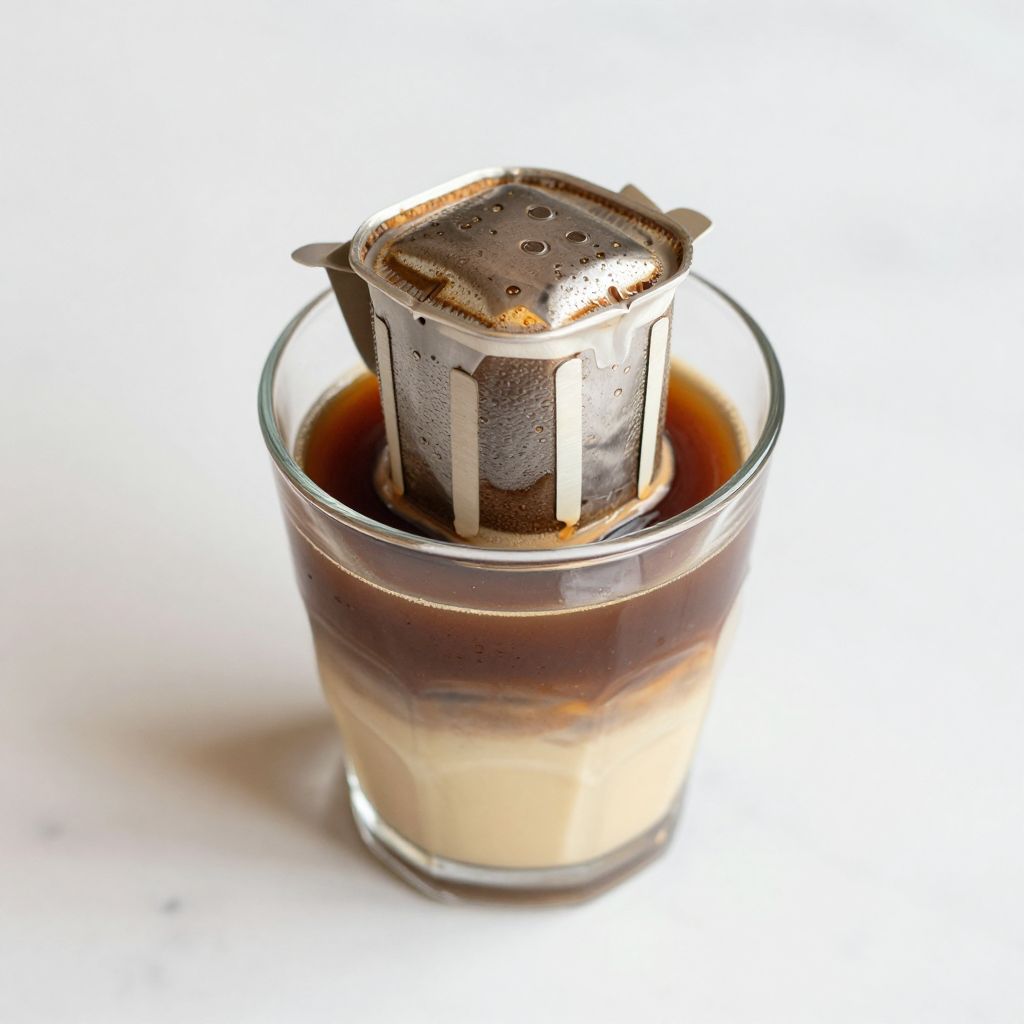
Pour 2 tablespoons of sweetened condensed milk directly into your cup below the phin. This is where the magic happens; the milk sits waiting while the coffee drips in, and they merge into that signature creamy, sweet base.
Step 5: Heat Your Water
Boil water in your kettle, then let it cool for about 30 seconds so it reaches around 195 to 205 degrees Fahrenheit. Water at this temperature extracts coffee flavor without scorching the grounds or creating harsh, unpleasant bitterness.
Step 6: Wet the Grounds
Pour just enough hot water into the phin to dampen the coffee grounds, then pause for about 10 seconds. This bloom allows the coffee to release trapped gases and prepares the grounds for full extraction.
Step 7: Fill and Brew
Fill the phin chamber with the remaining hot water, pouring until the water level reaches just below the rim. The water will drip slowly through the grounds, taking 3 to 5 minutes to fully brew depending on how finely you ground your coffee.
Step 8: Stir and Enjoy
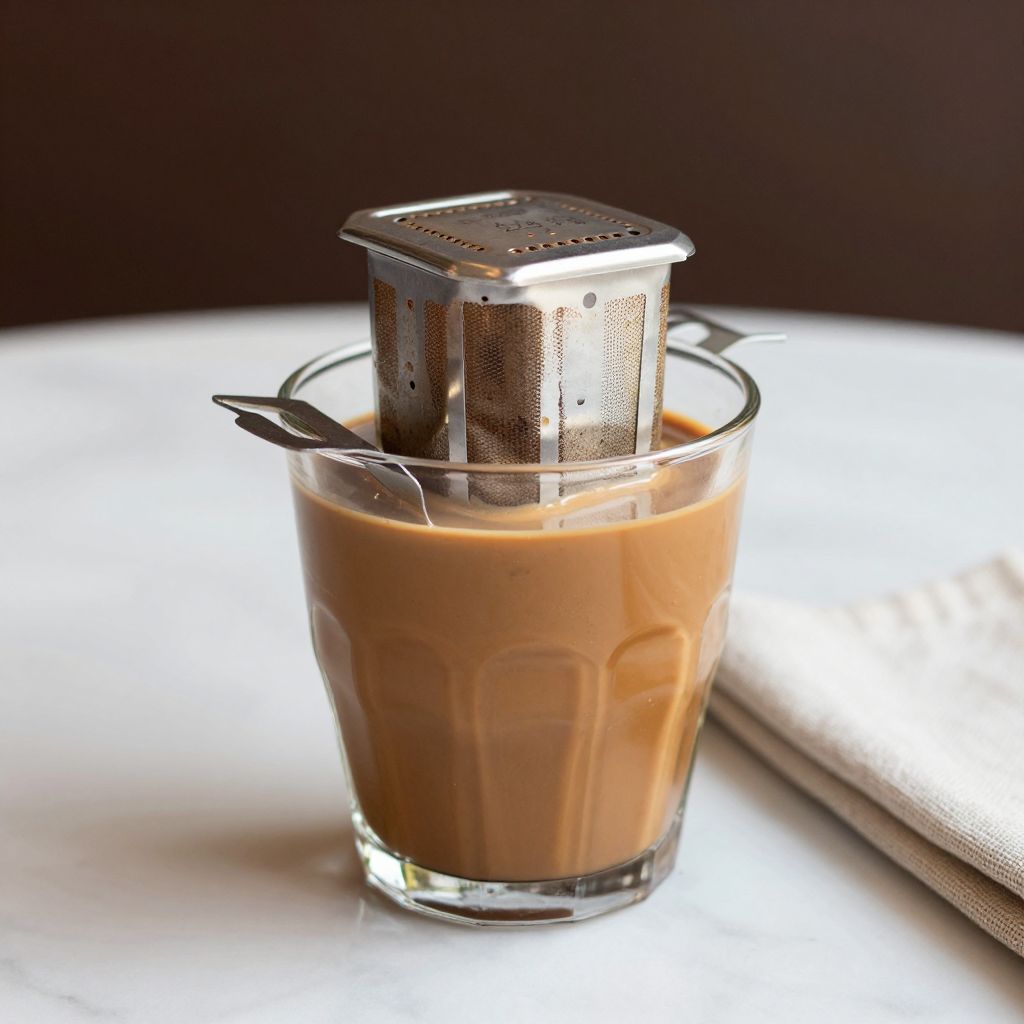
Once all the coffee has dripped through, carefully remove the phin filter and stir the coffee and condensed milk together thoroughly. The mixture should be a uniform caramel brown color with a silky, luxurious texture.
Pro Tip: Never rush Vietnamese coffee; the slow drip is where the flavor develops, so resist the urge to increase the brew time by using hotter water or finer grounds.
Tips for the Best Vietnamese Coffee
- Invest in a quality phin filter made from stainless steel; cheap aluminum versions distribute heat unevenly and rust quickly. A good phin costs under fifteen dollars and lasts for years with minimal care.
- Buy whole robusta beans and grind them fresh right before brewing for maximum flavor and aroma. Pre-ground coffee sits oxidizing in the bag and loses its punch within days of opening.
- Use actual sweetened condensed milk from a can, not condensed milk substitute or homemade versions; the texture and sweetness are specifically calibrated for this drink. Opening a fresh can also guarantees the right viscosity and richness.
- Brew at roughly the same time each morning if possible, because your palate adjusts and you’ll appreciate subtle flavor variations you missed before. Consistency in routine also means consistency in taste.
- Keep your phin clean and dry between uses; coffee oils build up and turn rancid if the filter sits wet or unwashed. A quick rinse under hot water and a wipe with a dry cloth keeps it fresh.
Common Mistakes to Avoid
- Using arabica coffee instead of robusta thinking it’s fancier; arabica is lighter and won’t give you that bold, earthy punch that makes Vietnamese coffee distinctive. Robusta is the traditional choice for a reason.
- Pouring the hot water all at once and then pressing down on the phin; this creates uneven extraction and produces a thin, weak brew. Wet the grounds first, let them bloom, and then fill the chamber gradually.
- Skipping the sweetened condensed milk and substituting regular cream or milk; this changes the drink entirely and removes the signature sweet, creamy character. Sweetened condensed milk isn’t just a flavor choice; it’s structural to the recipe.
- Grinding your coffee too coarse thinking it will taste cleaner; overly coarse grounds under-extract and leave you with a bitter, flat cup. Medium-fine grounds allow proper contact time without muddiness.
- Brewing with water that’s too hot, assuming hotter means faster extraction; boiling water scorches the grounds and creates harsh, acrid flavors. Patience and proper temperature produce infinitely better results.
Serving Suggestions
Vietnamese coffee works beautifully on its own as a morning ritual, but it also pairs wonderfully with light breakfasts or as an afternoon pick-me-up. The rich sweetness and strong coffee flavor complement both savory and sweet foods without overwhelming them.
- Serve hot with Vietnamese banh mi for a complete breakfast pairing that balances savory and sweet
- Pour over ice with extra condensed milk for a refreshing summer version (called “ca phe sua da”)
- Enjoy alongside fresh pastries or croissants for a simple European-inspired morning
- Pair with Vietnamese pork chops for an authentic lunch that feels restaurant-quality
- Sip slowly on its own as a meditative moment during a busy day
Variations to Try
- Iced Vietnamese Coffee: Brew the coffee directly over ice instead of hot, then stir in the condensed milk; this creates a refreshing version perfect for warm weather without the need to cool the hot brew first.
- Egg Vietnamese Coffee: Whisk an egg yolk with sweetened condensed milk before pouring the hot coffee over it; the result is a custard-like, dessert-quality drink called “ca phe trung” that tastes like liquid tiramisu.
- Vietnamese Coffee with Coconut Milk: Replace half the condensed milk with coconut cream for a tropical twist that brings out floral and nutty notes in the coffee. This variation feels lighter while maintaining the creamy base.
- Black Vietnamese Coffee: Brew the coffee straight without condensed milk, using slightly more grounds for intensity; this highlights the roasted, earthy qualities of robusta and lets coffee purists appreciate the bean’s full character.
- Spiced Vietnamese Coffee: Add a tiny pinch of cardamom or cinnamon to the grounds before brewing for subtle warmth and complexity. Start with a grain of spice; you can always add more next time.
Dietary Adaptations
- Dairy-free: Replace sweetened condensed milk with coconut condensed milk or homemade sweetened cashew cream; the trade-off is slightly less richness, but the drink remains delicious and creamy.
- Vegan: Use full-fat coconut milk mixed with maple syrup or agave to recreate the sweetness and texture of condensed milk; stir it directly into the brewed coffee rather than using it as a base.
- Low-sugar or Keto: Use heavy cream or coconut cream with a sugar-free sweetener like monk fruit or erythritol to replace the condensed milk; this dramatically reduces sugar while maintaining the creamy mouthfeel.
- Gluten-free: Vietnamese coffee is naturally gluten-free; just verify your specific brand of robusta coffee and condensed milk contain no additives, though this is almost never an issue.
Storage and Reheating
Refrigerator
Store leftover brewed coffee in an airtight container for up to three days. The flavor stays intact, and you can reheat it gently or drink it cold.
- Transfer to a glass jar with a tight-fitting lid to prevent odor absorption
- Keep separate from the condensed milk if you brewed it without mixing
- Label with the date so you know exactly when you made it
Freezer
Freeze brewed Vietnamese coffee in ice cube trays for up to two months if you want to make iced versions later. This creates instant coffee cubes that chill your drink without diluting it with regular ice.
- Pop frozen coffee cubes into a glass and add fresh condensed milk
- Use these cubes in smoothies for a coffee kick with creaminess
- Never freeze sweetened condensed milk; it separates and becomes grainy
Reheating
Reheat leftover coffee gently on the stovetop or in the microwave, stirring in fresh condensed milk after warming. Avoid boiling, which damages the delicate coffee flavors you worked to extract slowly.
- Microwave in 30-second intervals, stirring between each, until hot
- Pour over low heat in a small saucepan, never allowing it to bubble
- Add fresh condensed milk rather than relying on old milk that may have separated
Nutrition Information
| Nutrient | Amount |
|---|---|
| Calories | 95 |
| Total Fat | 3.2g |
| Saturated Fat | 2.1g |
| Carbohydrates | 17.8g |
| Fiber | 0g |
| Sugar | 17.2g |
| Protein | 1.1g |
| Sodium | 38mg |
| Cholesterol | 6mg |
These values represent a single serving of Vietnamese coffee made with the ingredients listed and assume no additional sweeteners or milk beyond what’s specified. Iced versions have the same nutrition unless you add extra condensed milk.
Vietnamese Coffee
Ingredients
Equipment
Method
- Place the phin filter on the cup and rinse with hot water to warm the metal.
- Add 2 tablespoons of finely ground robusta coffee into the phin chamber.
- Gently tamp the grounds with the filter's tamper to create slight resistance.
- Pour 2 tablespoons of sweetened condensed milk into the cup below the filter.
- Boil water in the kettle and let it cool for 30 seconds until it reaches 195 to 205°F.
- Pour a small amount of hot water to wet the grounds and let bloom for 10 seconds.
- Fill the filter with remaining hot water and allow coffee to drip for 3 to 5 minutes.
- Remove the filter and stir the coffee and condensed milk until smooth and uniform.
Notes
Frequently Asked Questions
Can I make Vietnamese coffee without a phin filter?
Yes, you can brew robusta coffee in a regular drip machine or pour-over, then stir in condensed milk after brewing. The phin produces a slightly different flavor profile because of the slower drip, but the basic drink is achievable with any brewing method.
What’s the difference between robusta and arabica coffee?
Robusta has nearly twice the caffeine content and a darker, earthier, more bitter flavor, while arabica is smoother and more nuanced. Vietnamese coffee traditionally uses robusta because of its bold character and robustness in hot, humid climates.
How long does a can of sweetened condensed milk last once opened?
Transfer opened condensed milk to an airtight container and refrigerate for up to two weeks. If it smells sour or tastes off, discard it immediately rather than taking a risk.
Why is my Vietnamese coffee weak or watery?
This usually means your grounds are too coarse, your phin isn’t tamped enough, or your water isn’t hot enough. Try using medium-fine grounds, pressing down gently on the tamper, and ensuring your water sits between 195 and 205 degrees.
Can I add flavors like vanilla or chocolate to Vietnamese coffee?
Absolutely; you can stir in a splash of vanilla extract, a drizzle of chocolate syrup, or a pinch of cinnamon before or after brewing. Start with small amounts and taste as you go to avoid overwhelming the coffee’s natural complexity.
Is robusta coffee harder to find than arabica?
Robusta has become more widely available in specialty coffee shops and online, though your regular grocery store may only carry arabica. Amazon and Vietnamese grocery stores carry authentic robusta beans at reasonable prices.
Final Thoughts
Vietnamese coffee transforms a simple cup into a deliberate ritual that rewards patience and attention. Once you master this basic recipe, you’ll find yourself making it often, appreciating new flavor layers with each brew.
Try this recipe this week and taste what millions of Vietnamese coffee lovers already know. The combination of bold robusta and sweet condensed milk creates something genuinely special that deserves a permanent spot in your morning rotation.
Ready to explore more authentic recipes from Vietnamese cuisine? Discover how to make Vietnamese pork chop recipe to pair with your morning coffee, or learn about creating homemade coffee syrup recipe for your beverages.